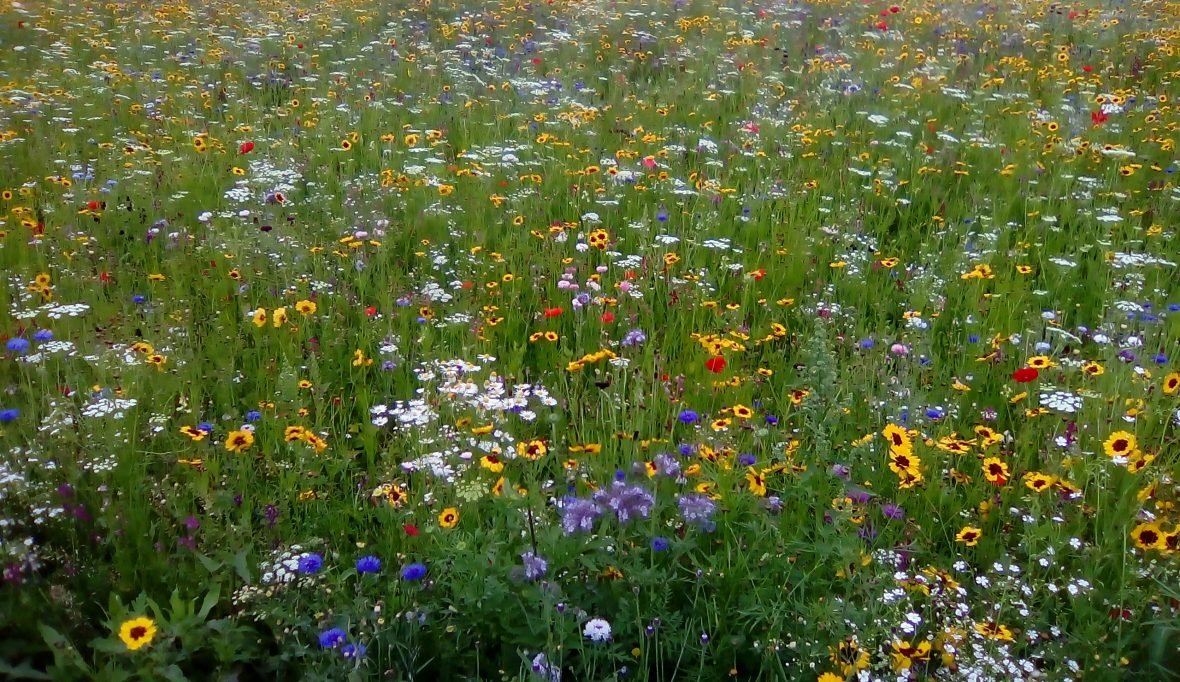
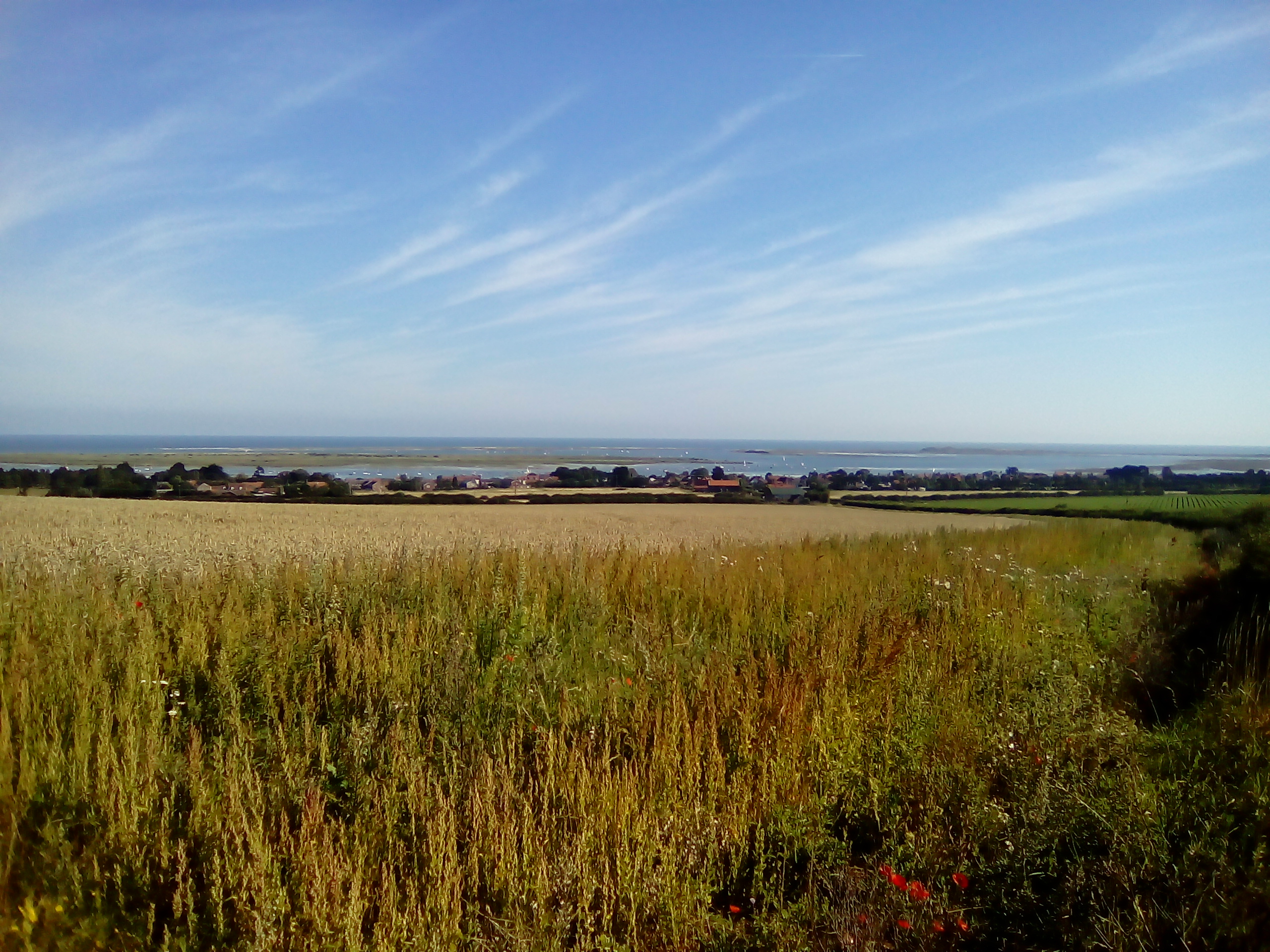
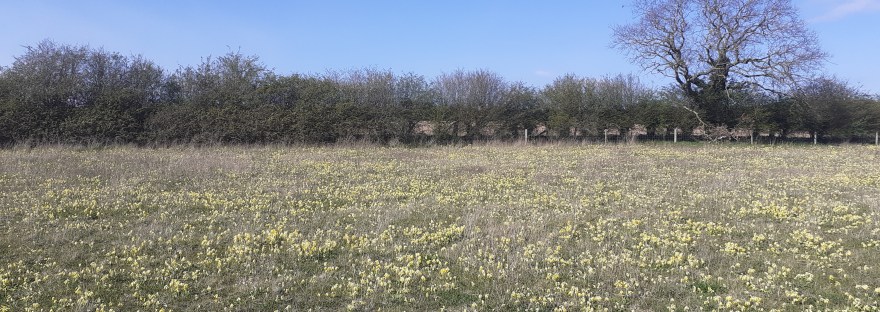
Last April I went across to village of Helpston in Northamptonshire to see the village where John Clare, the peasant poet of the 19th century, grew up. It was very pleasant to see the seed from which his beautifully poetry bloomed. He wrote many touching poems about the wild flowers that surrounded the village and bemoaned the destruction of the natural habitats of our wild flowers which had gone under the plough. He was obviously a very sensitive man and eventually this caused him to be interred in a lunatic asylum in Epping Forest. Such had his madness taken hold of him that he walked back to Helpston to see his childhood sweetheart who had infact died 3 years previously.
Unfortunately, when I got to Helpston I was bitterly disappointed by the agricultural practices around the village which consisted of a monoculture of wheat, yellowing weeds, polluted, litter filled dykes and ofcourse plenty of dog shit. If John Clare could have seen the Helpston fields he loved and lyricised he would have fallen to his knees and wept.
But ofcourse this intensification of farming in Britain is not peculiar to us. Many nations of North-Western Europe have gone the same way. But why have we gone down this path? It seems to me that after the second World War there was a decision made that we must be self-sufficient in cereals so as to avoid the lack of food created by Hitler’s blockades. In tandem with the development of artificial fertilizers this resulted in the advent of industrialized farming.
The modern method of farming cereals is particularly effective at destroying any wild flowers. This is because the selective herbicides used don’t kill the cereal grasses (monocots) but kill the broadleaved weeds (dicots) and the additional spray which lands on field edges destroys the opportunity for diversity of flora there. As my friend David Wilkinson joked ‘Farmers only want a level spraying field.’
In recent times this has been somewhat remedied by grants for wild plants to be left at the edges of fields incentivizing farmers to preserve them. Also, the use of such edges to provide cover for wild birds that can be raised for profit has also proved lucrative. Pheasant shoots are big business- I have heard figures of £1,000 per gun quoted for a day’s shooting.
In addition the mass use of fertilizer in farming plus the nitrogenous fumes of cars has resulted in a build up of nitrogen in the soil, generally speaking, which favours fast growing plants such as ivy and brambles in woodland or couchgrass or bindweed in cultivated soil. This means that many of our natives flowers such as ragged robin, field scabious and orchids are increasingly marginalized into smaller and smaller nature reserves. Particularly in the South of England (which has a fair few areas of chalk grassland) which would support a rich diversity of flora the land is no longer actively grazed because that type of agriculture is no longer profitable and so that area gradually returns to scrub by the process of succession. Again attitudes are changing but that has been the general direction since the Second World War. Similarly, in woodland the increased use of machinery and the proliferation of deer (presumably because supermarket chicken is more palatable than venison to urban people) has resulted in areas that would have been carpeted with lesser celandines, anemones,violets, primroses and possibly even orchids to become significantly less diverse. One particular example of this that I find fascinating is of Pulmonaria obscura (Suffolk lungwort) which is found only in 3 woods in Suffolk (according to Peter Marren in his book about the rarer wild flowers of Britain called Chasing the Ghost (2018)). How many other wild plants like this have gradually become more and more rare that they slip out of the public’s consciousness? Too many and there is surely worse to come without commitment from society at all levels.
It is a similar story with road side verges. The land cannot be used for agriculture so it could be a great opportunity for biodiversity. Thanks to the pandemic councils realized the great advantages of not mowing or at least mowing at the right time for seed dispersal( late summer) and this was followed up with No Mow May last year. But previously because of concerns over road safety, general tidiness and tight budgets of councils road verges have been butchered and I believe at one time selective weedkiller was used to control broad leaved weeds. Fortunately, in my native Norfolk we have been able to enjoy cow parsley (Anthriscus sylvestris) with its frothy umbel shaped flowers in May but perhaps because of climate change Alexanders(Smyrnium olusatrum) which I am less fond of appears to be out competing it particularly in coastal areas….
But nevertheless the largest use of land is farming in the UK(75%) so it is crucial that we find a way to make farming compatible with biodiversity through planting more hedges, having more set aside, encouraging organic farming and the planting of trees and minimizing the use of inorganic fertilizer and weedkiller.
With efficient machinery, the creation of bigger fields through the destruction of hedgerows and the use of fertilizer huge yields were created so that at one point we were producing far more food than we would ever need. This was all encouraged by the common agricultural policy(CAP) which led to the swimming pools of wine, mountains of butter and wheat. The lack of flexibility of such a policy and the huge sums of money it took(about half the total value of the EU’s total budget) has been a huge source of criticism from all sides of Europe and now that Britain has left the EU a massive opportunity has been created for the UK government to create a progressive and efficient type of farming suitable to the 21st century which considers climate change, biodiversity as well as security of supply.
The issue is ofcourse whether we really need to produce so much grain. And I would argue that we don’t. A huge proportion of grain is used as feed for animals so as to add value to them so really if we were to reduce our meat consumption then ofcourse we would need less land to feed ourselves. As Colin Tudge pointed out this does not mean we should forgo meat completely because certain areas of the UK and the world are only suitable for livestock farming such as sheep farming on the mountains of Wales.
I do not pretend to be an expert on farming but I do care hugely about the welfare of the natural world not only in my own country but in the whole world. With more and more land being used for farming I hope we can find a framework which can allow farmers to encourage diversity and allow them to make a decent living. The current Agricultural policy in the UK achieves neither of those things.

 A gardener out of this world