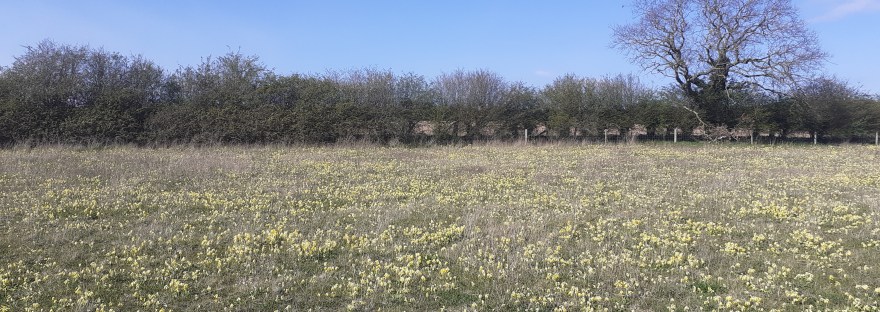
Some Thoughts on British Farming and How we Lost our Biodiversity after the Second World War

Last April I went across to village of Helpston in Northamptonshire to see the village where John Clare, the peasant poet of the 19th century, grew up. It was very pleasant to see the seed from which his beautifully poetry bloomed. He wrote many touching poems about the wild flowers that surrounded the village and bemoaned the destruction of the natural habitats of our wild flowers which had gone under the plough. He was obviously a very sensitive man and eventually this caused him to be interred in a lunatic asylum in Epping Forest. Such had his madness taken hold of him that he walked back to Helpston to see his childhood sweetheart who had infact died 3 years previously.

Unfortunately, when I got to Helpston I was bitterly disappointed by the agricultural practices around the village which consisted of a monoculture of wheat, yellowing weeds, polluted, litter filled dykes and ofcourse plenty of dog shit. If John Clare could have seen the Helpston fields he loved and lyricised he would have fallen to his knees and wept.

But ofcourse this intensification of farming in Britain is not peculiar to us. Many nations of North-Western Europe have gone the same way. But why have we gone down this path? It seems to me that after the second World War there was a decision made that we must be self-sufficient in cereals so as to avoid the lack of food created by Hitler’s blockades. In tandem with the development of artificial fertilizers this resulted in the advent of industrialized farming.

The modern method of farming cereals is particularly effective at destroying any wild flowers. This is because the selective herbicides used don’t kill the cereal grasses (monocots) but kill the broadleaved weeds (dicots) and the additional spray which lands on field edges destroys the opportunity for diversity of flora there. As my friend David Wilkinson joked ‘Farmers only want a level spraying field.’

In recent times this has been somewhat remedied by grants for wild plants to be left at the edges of fields incentivizing farmers to preserve them. Also, the use of such edges to provide cover for wild birds that can be raised for profit has also proved lucrative. Pheasant shoots are big business- I have heard figures of £1,000 per gun quoted for a day’s shooting.

In addition the mass use of fertilizer in farming plus the nitrogenous fumes of cars has resulted in a build up of nitrogen in the soil, generally speaking, which favours fast growing plants such as ivy and brambles in woodland or couchgrass or bindweed in cultivated soil. This means that many of our natives flowers such as ragged robin, field scabious and orchids are increasingly marginalized into smaller and smaller nature reserves. Particularly in the South of England (which has a fair few areas of chalk grassland) which would support a rich diversity of flora the land is no longer actively grazed because that type of agriculture is no longer profitable and so that area gradually returns to scrub by the process of succession. Again attitudes are changing but that has been the general direction since the Second World War. Similarly, in woodland the increased use of machinery and the proliferation of deer (presumably because supermarket chicken is more palatable than venison to urban people) has resulted in areas that would have been carpeted with lesser celandines, anemones,violets, primroses and possibly even orchids to become significantly less diverse. One particular example of this that I find fascinating is of Pulmonaria obscura (Suffolk lungwort) which is found only in 3 woods in Suffolk (according to Peter Marren in his book about the rarer wild flowers of Britain called Chasing the Ghost (2018)). How many other wild plants like this have gradually become more and more rare that they slip out of the public’s consciousness? Too many and there is surely worse to come without commitment from society at all levels.

It is a similar story with road side verges. The land cannot be used for agriculture so it could be a great opportunity for biodiversity. Thanks to the pandemic councils realized the great advantages of not mowing or at least mowing at the right time for seed dispersal( late summer) and this was followed up with No Mow May last year. But previously because of concerns over road safety, general tidiness and tight budgets of councils road verges have been butchered and I believe at one time selective weedkiller was used to control broad leaved weeds. Fortunately, in my native Norfolk we have been able to enjoy cow parsley (Anthriscus sylvestris) with its frothy umbel shaped flowers in May but perhaps because of climate change Alexanders(Smyrnium olusatrum) which I am less fond of appears to be out competing it particularly in coastal areas….

But nevertheless the largest use of land is farming in the UK(75%) so it is crucial that we find a way to make farming compatible with biodiversity through planting more hedges, having more set aside, encouraging organic farming and the planting of trees and minimizing the use of inorganic fertilizer and weedkiller.

With efficient machinery, the creation of bigger fields through the destruction of hedgerows and the use of fertilizer huge yields were created so that at one point we were producing far more food than we would ever need. This was all encouraged by the common agricultural policy(CAP) which led to the swimming pools of wine, mountains of butter and wheat. The lack of flexibility of such a policy and the huge sums of money it took(about half the total value of the EU’s total budget) has been a huge source of criticism from all sides of Europe and now that Britain has left the EU a massive opportunity has been created for the UK government to create a progressive and efficient type of farming suitable to the 21st century which considers climate change, biodiversity as well as security of supply.

The issue is ofcourse whether we really need to produce so much grain. And I would argue that we don’t. A huge proportion of grain is used as feed for animals so as to add value to them so really if we were to reduce our meat consumption then ofcourse we would need less land to feed ourselves. As Colin Tudge pointed out this does not mean we should forgo meat completely because certain areas of the UK and the world are only suitable for livestock farming such as sheep farming on the mountains of Wales.

I do not pretend to be an expert on farming but I do care hugely about the welfare of the natural world not only in my own country but in the whole world. With more and more land being used for farming I hope we can find a framework which can allow farmers to encourage diversity and allow them to make a decent living. The current Agricultural policy in the UK achieves neither of those things.
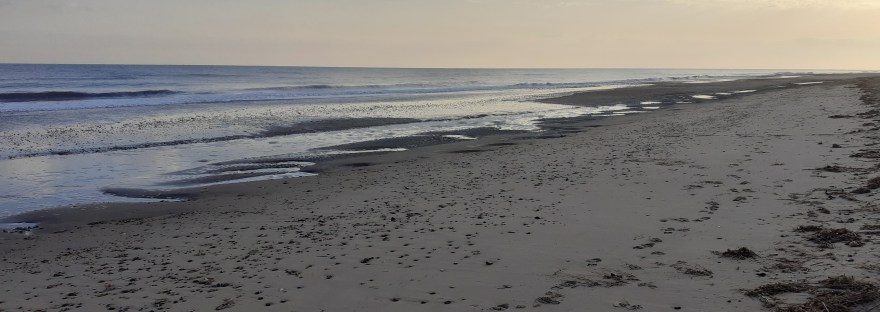
A comparison between Norfolk and Suffolk

As I chronicled in my book, Down The Garden Path- Snippets from the Cottage Gardener (2019), I have a special affection for my home county of Norfolk and its sleepy, bucolic landscape and plethora of medieval buildings.

However since my Mum sold our house there in 2018 I have had to return as a tourist and even more of an outsider. But it has been very nice to potter around the lanes not just of North West Norfolk but the Waveney valley near Diss with its moated and thatched houses and cows grazing on the green grass created by the river. Similarly, the wild but largely working class seaside resorts on the North East Norfolk coast beyond Cromer such as Mundesley and Winterton. The beaches are just as beautiful as North West Norfolk but there are more caravans and less tarted up flint holiday cottages. Also, there is the area around Thetford with its pines and eery silence plus the fine churches surrounding Reepham.

But I am a middle class boy and so it is natural that the Suffolk coast should appeal to me as well. In 2018 I walked 70 miles from Felixstowe to Homersfield via the Suffolk Coast and despite it not being as epic as some travel walks such as Laurie Lee’s I Walked Out One Midsummer Morning when he crossed Spain from North to South I look back on it with great fondness aside from a close shave crossing the A12.

Why is this? Well, the Suffolk coast does not have a coast road running its whole length as it does in Norfolk so the settlements there are more isolated such as the lost city of Dunwich and the secluded Orford with its castle, excellent seafood and post apocalyptic island, Orford Ness. Despite this and probably because it is closer to London Suffolk is a much more foodie county, at least in my experience. The bakeries and coffee are better and so is the fish and chips and there are a lot more pubs that take food genuinely seriously instead of just charging gastro pub prices for mediocre food as some pubs in Norfolk are guilty of. And of course despite some of the best barley being grown on the Norfolk coast I still think Adnams of Southwold is the premier brewer of East Anglia and is well complemented by the equally successful Aspalls whose site is tucked away just north of the pretty village of Debenham in mid-Suffolk not far from Eye. I drove past it on my recent trip in January and although there were some apple trees close by it is quite remarkable that a county so empty of apple trees can have such a premium cider brand that stands toe to toe with those from the West country.

Anyway, Suffolk is undoubtedly busier overall…especially on the main roads and the people are very posh except in Ipswich and Felixstowe (which is the exception that proves the rule!). As Simon Knott said if you see someone driving a pick-up in Norfolk they have probably got a shotgun in the back, a baseball cap on and Country and Western music on the radio whereas in Suffolk they are probably driving a piece of antique furniture back to Islington, North London. Speaking of Simon Knott I cannot recommend his website on East Anglian churches enough. He has compiled an impressive list in immense and lyrical detail of almost every church in Norfolk, Suffolk, Essex and Cambridgeshire( http://www.suffolkchurches.co.uk/) and it has been a more amusing and helpful guide than the dryness of Pevsner or conceit of Simon Jenkins. Anyway, based on what he has helped me see I must add to what I have already said that I think that Suffolk churches are better. Admittedly, Norwich has a great wealth of churches but the context of the countryside is also vitally important in visiting a church in East Anglia…..travelling along a winding Suffolk lane with huge oaks on each side of the verge and perhaps pheasants scuttling under the hedgerows is part of the whole experience of visiting East Anglia and I hope that will not change.

Anyway, my point is that in the best 10 churches in Suffolk the rural context adds a huge amount to the overall aura of the church whereas in Norfolk in most cases the context is beautifully rural but aren’t quite as unique in their situation. For example, when you have Blythburgh church, arguably the finest church in East Anglia, with the marshes on one side and the estuary on the other you have a context that can make the church more than the sum of its parts and it is the same with the pilgrimage site of Iken church near Snape Maltings or the end of the world feeling you get at Covehithe church with its giant shell of a church close to the crumbling cliffs.

Don’t get me wrong-Norfolk has a rich variety of great churches but I would argue that they are not quite as good. Maybe a few can match Suffolk for rural context- think Burham Norton or Salthouse church on their windswept hills not far from the sea and Little Witchingham in the swaying grasses of September in the back lanes round Reepham. But overall there are a lot more cases in Suffolk where the context of a church is as breathtaking as the building itself.

Similarly, in terms of wall paintings still visible despite the attempts of the Puritans and William Dowsing(the great smasher of Popish ornaments in East Anglia) I think again Suffolk is superior. On my last trip in January 2022 I saw the best wall paintings I have ever seen in North Cove church (near Lowestoft), sadly open only on request from the churchwarden, which gives only a hint of what riches must have existed when these churches were lavishly painted with images of the Last Judgement, The Wheel of Fortune and The Resurrection. Similarly, the Wenhaston doom is worthy of the Victoria and Albert Museum but is found in a very modest country church. Of course there are wall paintings in Norfolk churches such as those of the martyrdom of St Edmund at Fritton or St George and the Dragon at the wonderful little church at Little Witchingham which was saved from ruin intially by the art historian Eve Baker and subsequently by the Norfolk Churches Trust. But overall Suffolk is to my great regret a bit better….

There is a similar theme in the small market towns that dot the counties of Norfolk and Suffolk. Again, the lack of money in Norfolk at least in comparison to Suffolk means that many Norfolk towns such as Fakenham, Dereham and Hunstanton have little to offer in terms of shopping or eating experience because the people who shop there are not prepared to spend much money on food and drink, books or clothes. It does not bother me particularly because there are other diversions in Norfolk towns aside from the shopping. Of course not all Norfolk towns are impoverished- think Holt or Burnham Market and indeed the capital; the vibrant, cosmopolitan and wealthy Norwich. But driving through inland rural Suffolk I discovered market towns such as Botesdale and Debenham which were well off the tourist trail and therefore I expected to be slightly run-down but still had a thriving high street as well as pretty Suffolk pink thatched cottages, a fine situation and lovely grand churches.

But what Norfolk does have which Suffolk does not to the same extent is tranquility and wildness. There are a lot more deserted country lanes in Norfolk and there are much fewer big roads such as the ghastly A12 and A11 and the A roads that there are in Norfolk are mainly concentrated around Great Yarmouth and Norwich. Although Suffolk has patches that feel more isolated overall the estuaries and beaches of Norfolk feel wilder and that you have more space. Old Hunstanton beach, Scolt Head, Gun Hill and Holkham beach to name a few are not really matched by anything in Suffolk.

Furthermore, there are a lot more hedgerows, habitats and cover left for wildlife( most noticeably birds) in Norfolk fields. Generally, I feel that Norfolk farmers have managed to stay closer in tune with the natural world than the semi-industrialized farming that I feel has gone on in much larger parts of Suffolk. Sometimes I felt quite intimidated by the huge fields of Suffolk that seemingly stretch to the horizon with very little wildlife visible on the unnaturally bare earth.

So despite the obvious advantages of living in Suffolk Norfolk will always be my favourite partly because of the bias created by having spent my childhood there. But also because it is relatively unspoilt, wild and peaceful in a way I don’t think any other county in the South of England is except parts of Devon and Cornwall, perhaps. I rest my case so to speak….its just my opinion and I admit to using some sweeping generalizations but all that is written here is based on the love of 39 years ranging all over that beautiful county and to a lesser extent it’s posher step-sister from further South.

A visit to Knettishall Heath

I did not expect Knettishall Heath(KH) to differ greatly from other parts of Thetford Forest with its monoculture of pines and silence. But actually it is quite distinct and has a diverse mosaic of habitats from mixed woodland to riverside meadows to heathland, ofcourse.

The landscape as we see it now on Knettishall Heath is not natural. It was created by our ancestors in the Bronze age, about 4,000 years ago, through the early use of grazing animals and had changed very little until the advent of modern farming and forestry.

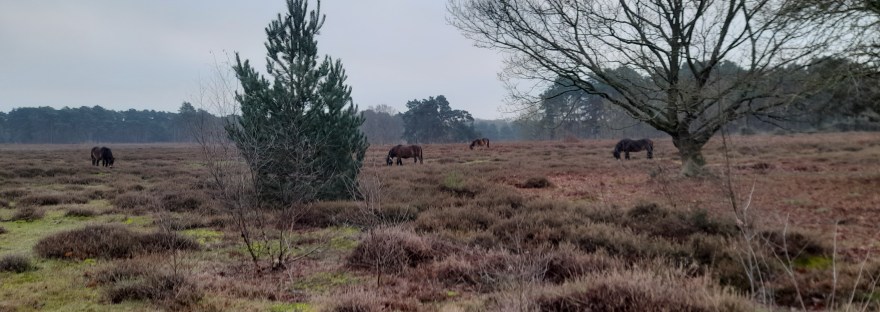
Nevertheless, KH represents our best chance of seeing what a Bronze Age landscape looked like as a direct result of the efforts of The Suffolk Wildlife Trust( and the local community) to restore the incursion of woodland during the 20th century. Exmoor ponies are extremely conspicuous on the heath and continue to prevent the colonisation of bracken and woodland.

This area of the Norfolk-Suffolk borders where KH is are known as the Brecks( or Breckland) and consists of a mixture of sandy and chalky soils liberally sprinkled with heather and Scots pines. Because of these soils the flora is very diverse offering plants indicative of either sandy or chalk soil. Furthermore, the habitat that is created by the climate and soil is of national significance with 12,500 species, 30% of which are nationally rare.

That being said, I did not get first hand experience of much wildlife mainly because it was the middle of winter. But the sight of Exmoor ponies munching on the vegetation in the mist was very poetic. A slice of the New Forest in Suffolk….

The other thing I really liked, as a walker, was that it is a junction of ley lines with the Icknield Way, Peddars Way and Angles Way all passing through it. The Icknield way apparently predates man’s existence and sweeps all the way to the Dorset coast whilst the Peddars Way is a Roman road leading to Holme-next-to-sea on the Norfolk coast where Roman soldiers would then take the ferry across the Wash and head onto Lincoln.

To illustrate its antiquity a Bronze Age burial mound can still just be seen here. Although it is a long way from being the best preserved site of that time!

A much later development that I also find quite interesting is that because the Brecks are so good for wild game, in the 18th century, rabbits were farmed in specially built rabbit warrens here which are again just visible.

I am not claiming the The Brecks are worth a special visit but if you are in the area you might be pleasantly surprised by what KH has to offer….

Inspiration from the Critically Rare Chalk Streams of England-Our Very own Rainforests

I recently paid a visit to Winchester where I re-acquainted myself with the walk through Winchester College water meadows to The Hospital of St Cross. I half remembered the beautiful, ancient buildings at St Cross, its impressive gardens and the promise of ‘The Wayfarer’s Dole’ of ale and bread.

But in fact I never got as far as St Cross because I was so absorbed by the crystal clear water of the chalk stream that runs in a divided and haphazard way through the water meadows. Because it was autumn there were a number of plane tree leaves running down the stream, presumably from the inner courtyards of the college; whose mother trees I had half glimpsed whilst going past hoping; as Evelyn Waugh would say ‘to find that low door in the wall others had found before me which entered into an enchanted garden’.

The slow moving plane tree leaves in the clear water evoked in my mind that famous painting of Ophelia by Millais where she drifted down a river singing surrounded by bobbing flowers. The sun-lit waters on that late autumn day seemed to have the same magical quality to me.

The river also contained a number of small trout, a hungry-eyed heron and watercress but alas no kingfishers. I have always been aware of chalk streams, having recently happily strolled along the river Nar in Norfolk, but did not know that they are such a predominately English and indeed, endangered, habitat. It seems that about 85% of all chalk streams occur only in England. So they are; as the Government website points out, ‘Our Rainforests’. If we can’t look after them perhaps we ought to less moral in our attitude to Brazil and its deforestation.

Farming and domestic demand for cheap water perhaps represent the most serious threat to our chalk streams. The release of fertilizer, particularly from watercress farming, for which chalk stream water is the ideal growing medium is a particular problem. But also not stealing too much of its water for our own use(such as for domestic water systems or irrigation) so that the flora and fauna dependent on the river are not affected by the water table being too low, especially in summer.

It does seem strange to me that with such nationalistic overtones in English politics these days that the chalk stream and the soft Wessex like landscape it largely runs through (with its rich biodiversity) is not heralded as an ideal representation of Englishness which is being destroyed by immigration and the pressure it puts on the landscape. But then perhaps the Ukippers don’t have a ramblers’ club.

Kenneth Graham evoked that landscape for different reasons when he wrote The Wind in the Willows in 1908 partly because of the development and spread of Socialism(those horrible common stoats and weasels taking over Toad Hall is given as an allegory of this) and possibly because he saw the darkening clouds of war(hence Ratty’s determination to never go to the wide world but stay in the safety of the riverbank(England)).

But in any case the chalk stream is mentioned in much first rate English literature and poetry from Thomas Hardy to Wordsworth ‘How richly glows the waters, Before us tinged with evening hues…’ to Keats who wrote To Autumn after a walk along the River Itchen in Winchester one evening or indeed Rupert Brooke’s famous poem about the river near the Vicarage in Granchester(a few miles downriver from Cambridge).

Each poem beautifully describes the romantic qualities of water in chalk streams chiefly by emphasizing the ethereal effect of light on water. However, I think it is Tennyson who captured the essence of the chalk stream best when he wrote in The Miller’s Daughter-

I loved the brimming wave that swam

Thro’ quiet meadows round the mill,


……. Still hither thither idly sway’d
Like those long mosses in the stream.

Or from the bridge I lean’d to

……see the minnows everywhere
In crystal eddies glance and poise
The tall flag-flowers when they sprung

Perhaps the final significant thing to say about the chalk stream is how it is intertwined with the art of fly fishing which does (from the outside at least) appear a deeply poetic and peaceful activity.

In the autumn I visited Stockbridge on the River Test which is a major centre of fly fishing and was excited to see quite a lot of large trout ‘grazing’ against the current in one of the streams running through the town.

If there weren’t huge restrictions on who can fish where and the expense of doing so then of course this wouldn’t be possible. Nevertheless it does sort of take the romance out of the activity of fishing if a young boy can’t just buy a cheap rod, skip school and spend a lazy afternoon fishing.

But investment in fishing and shooting by the elite (as a way of showing off whilst they play) is one route of preserving habitats that might otherwise be neglected. To be honest, anything that contributes to Britain being a cleaner, more sustainable and biodiverse place is fine by me especially if someone else is going to pay for it.

References-https://waterlightproject.org.uk/literature-chalk-streams/ (J.S Watts,2019)

Various articles from The Guardian and Scotsman

Being Nostalgic about the Natural World

It is not always possible to act rationally in our regard for the natural world. Nor is it desirable. If we were only to garden for practicality or farm for maximum yield without our love of the landscape then the world would be a much poorer place. Here I give 3 examples which I hope will give contrasting flavours of what I mean-

Offa’s Dyke

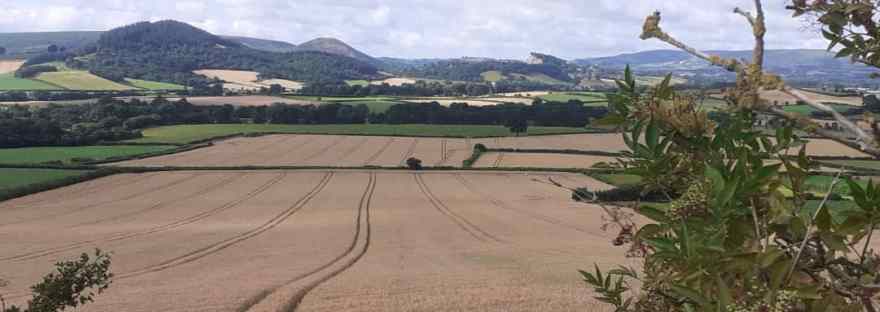
There are some places I feel instantly drawn to because of their natural beauty and I felt this with the fern carpeted woods and yellowing hayfields around the very well preserved bit of Offa’s dyke near Presteigne on the Herefordshire/ Powys border.

I don’t know why but it reminded me of Andy Dufrain’s description of the hayfield near Buxton in Southern USA where he made love to and proposed to his wife in the film Shawshank Redemption. This place had the same magical quality of making me nostalgic for it even though I had never been there before with its foxgloves,ferns and hay bales combined with the ancient structure of Offa’s dyke like a huge holloway ,dotted with hundred year old oaks, in the landscape. In addition to this is the often lyrically described Welsh hills as a perfect backdrop.

But in practical terms it was just another piece of forgotten about countryside. But like most people having watched South East England be carved up by roads, urban sprawl and railways I felt it was a landscape worth fighting for not least because it was in someway evocative of that dreamy piece of English countryside that seemingly only exists in dreams, drawings and Hollywood movies…

Anyway, I think it would be equally wonderful in the pouring rain and indeed the snow of winter such was the versatility of a landscape that graduated from the soft femininity of English farmland to the more masculine nature of the Welsh mountains further west.

The Blackcurrant

There is something rather special about a blackcurrant. Admittedly it is not the most tasty fruit raw because it is a little too tart for the sugar-loving human palate but a blackcurrant fool or posset is so delicious that when preceded with poached salmon, new potatoes and dill garnished cucumber it evokes nostalgia in me for the rare occurence of good, simple English cooking combined with a warm summer’s day.

I think Hugh Fernley-Whittingstall best used the idea of nostalgia to promote his television series when he went picking fruit with Ukranian students in the West country. After a hard days work(or something like that!) they gorged on Ukranian chicken borscht as one of them strummed on the guitar in front of the camp fire before Hugh F-W knocked up a very cosmopolitan dish of iles flottant with blackcurrant coulis in which he included the 6 blackcurrants from his own bushes which he produced from a tiny matchbox in his pocket. If there is anyone who is surely a graduate of the Chelsea charm school then it is Hugh F-W.

But the blackcurrant bushes themselves also have a trick of making you smell the future crop of blackcurrants( or perhaps what’s cooking in the kitchen so to speak…). This is because when you prune the plants in the autumn the smell given off by the branches is exactly the same as that of the ripe fruit so you can start salivating over that blackcurrant fool six months in advance.

Plants as Gifts

Nostalgia also plays a big part in how much trouble we take in trying to keep plants we should have chucked out years ago. A rose has double the sentimental value if it was given to us by a close friend who is no longer with us. This means that particularly Hydrangeas, minature roses and hyacinths which have been given as indoor gifts are then shoved into the bits of the borders that are unused- usually in the most unpromising spot I hasten to add….

This means that you often get a border filled with plants that should have been quietly taken to the compost bin for burial amongst the potato peelings to put them out of their misery years ago. This is totally understandable but sometimes we need to be a bit more Prussian in the way we view the plants in our garden especially, as in London, when space is at a premium.

My thoughts on plants as gifts need to be practical because I am a professional gardener but that doesn’t mean I don’t think it is rather lovely that people can form attachments to plants. This is because our subconscious and memory of childhood can give a glow to even the simplest windowbox of pansies just because our grandad used to grow them and that will beat the most productive, straight lined vegetable garden any day.