A tribute to Courtyard Farm and Peter Melchett

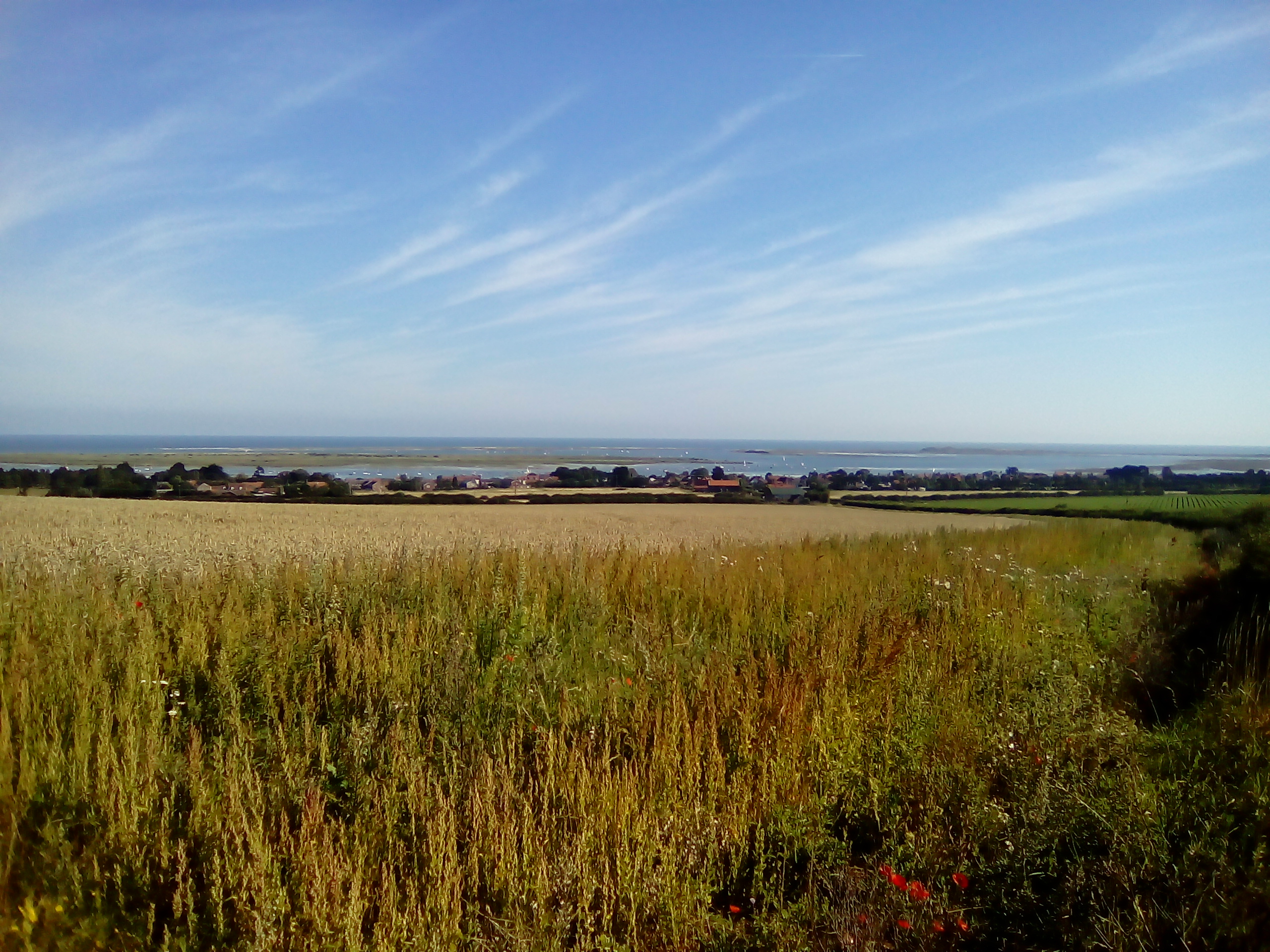
Peter Melchett; member of the House of Lords and committed environmentalist but very much a man of people died in 2018. But his legacy lives on at his organic certified farm near Ringstead, North Norfolk.

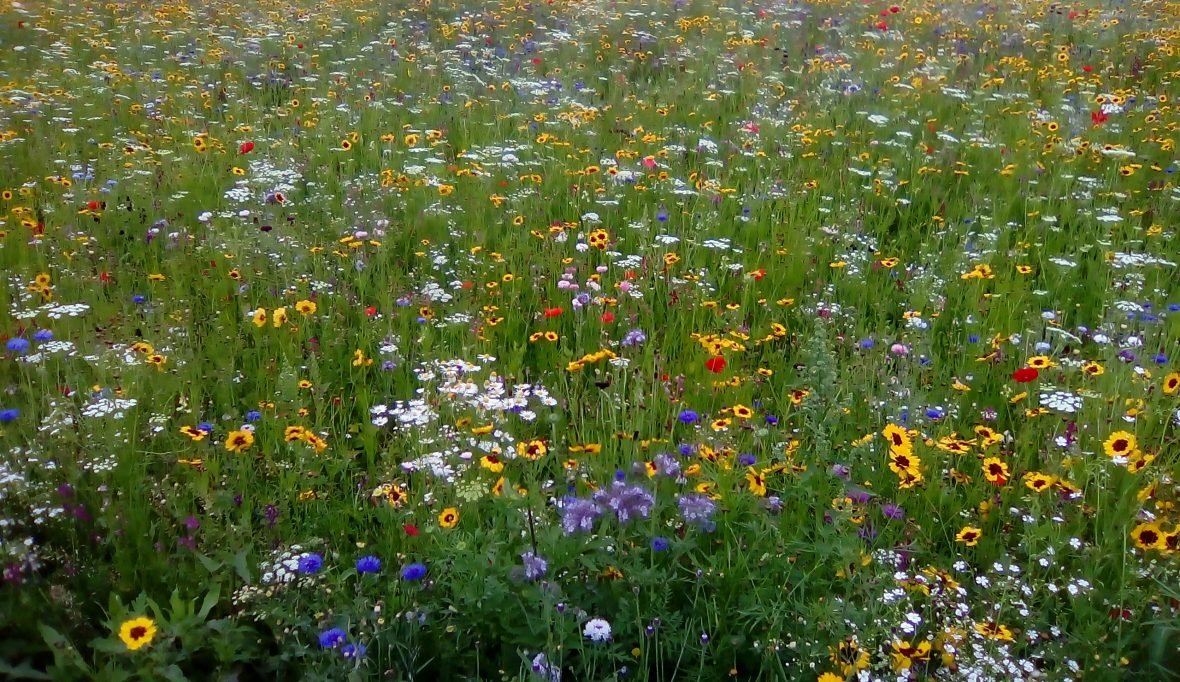
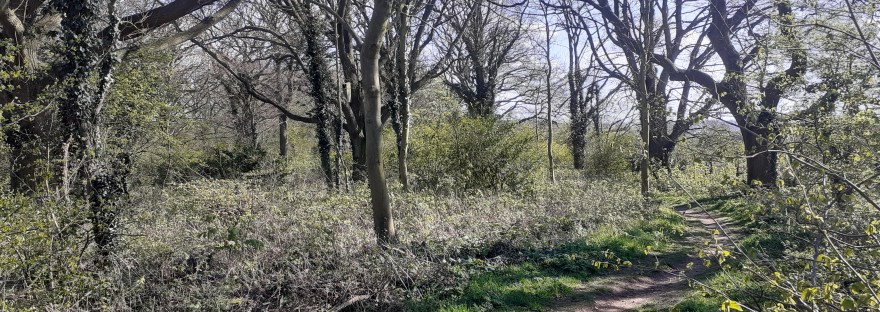
I had always marvelled at the fields of cowslips followed by ox-eye daises but had never paid much attention to the woods beyond. This is because you actually need to know what you are looking at to understand what they are trying to achieve otherwise you might put it down to lazy management. The signs they put up explained a good deal of their thinking such as leaving dead wood for fungi and invertebrates and an understorey of ivy and brambles(which is controlled so it does not get too thick) to provide cover for birds,reptiles and mammals.

Both the North wood and Wharton wood are managed under the Higher stewardship scheme (funded by the government) because this kind of ecologically managed wood is not profitable aside from the negligible cost of the hazel sticks that are harvested and used as fencing around the farm when the hazel is coppiced. Encouraging wildlife is important and it bears a relationship not only to our own wellbeing to live in a diverse habitat but also to sustainable farming, good soil fertility and sufficient birdlife to reduce pests without the need for pesticides….

I think I need to mention food webs here because in conventional, modern agriculture when you get an outbreak of aphids(for example) the crop is sprayed which means that the aphids’ natural predators such as ladybirds and blue tits have less food to eat. When combined with the destruction of the natural habitats of these predatory birds and insects (such as hedgerows, rough grass and woods) this means that when the next outbreak of aphids happens there are (again) not enough predators to reduce their numbers so that you are obliged to spray again. Its a self-perpetuating cycle and although organic agriculture does need to use pesticides in emergencies it can work if used intelligently such as on Courtyard farm (although with lower yields and a higher cost to food as a result). My reservations about Organic agriculture are purely based on the large, urban population of the world and its love of meat but that does not mean that it cannot be a niche market.

What I am trying to say is that the North Wood on Courtyard Farm is a wonderful work of ecology and my own subjective standard for judging that was how happy I felt in the spring sunshine strolling through the wood when it was alive with birdsong. This must be partly caused by their decision not to remove the ivy from the trees so that it can provide nesting and roosting sites as well as berries for birds in tandem with flowers for pollinators. Crucially ivy flowers and fruits at the coldest and most barren time of year so it’s contribution to bird numbers in particular is vital. But ofcourse they may lose a few trees in each winter because the weight of the ivy brings the tree down, which they admit on their information signs, but the diversity of the woodland is all the stronger for it…

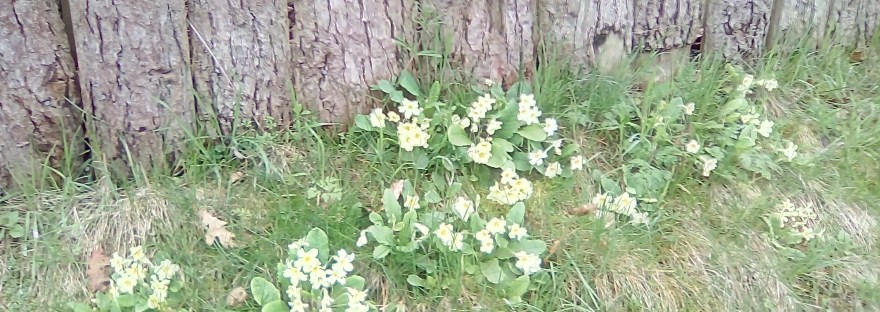
Conventional thinking about brambles and ivy, or at least what I have read; is that they tend to create a monoculture where nothing else will grow. But although the woodland floor was not densely covered with primroses or other woodland plants such as foxgloves there was some germination of some other flora such as speedwell and ground ivy.

Some of the planting was a little disappointing, though. Although the rabbits and deer must be ruthless in their destruction of anything munchable the use of surburban shrubs such as cherry laurel, Berberis darwinii and Mahonia aquifolium was a little out of keeping with an English wood.

I would have liked to see more European woodlanders such as wild strawberries, lungwort, honeysuckle, foxgloves, snowdrops etc. But at least they had systematically removed 99% of the sycamore seedlings, that are not native, and a massive problem if left unchecked, whilst planting more oak and hazel.

But this is the choice they have made. If you have more cover for mammals, birds and reptiles then the opportunities for germination and growth of woodland flora are reduced and I respect that decision despite being inclined the other way. The most important thing to remember from a governmental point of view is that farms should not be treated like businesses where profit is the primary aim but as stewards of the countryside. It is a simple point but has been neglected since The Agricultural Act of 1947 made yield British farming’s primary objective. This aim has been rather too successfully met since the UK joined the EEC in 1973. With the end of EU membership it is time to consider what we the British people consider our priorities for agriculture in the 21st century and it’s a great but daunting opportunity.

Snippets from my nostalgic return to Norfolk….

Fennel (Foeniculum vulgare)

A few weeks ago whilst in Brancaster I was tending a client’s herb garden to earn a bit of extra cash for my holidays. To my irritation the bronze fennel had really gone wild self seeding all over the herb garden.

Most herbs are quite promiscuous because their essential oils deter Peter Rabbit types from nibbling on them but in this case the fennel plants had obviously had a good deal more no strings fun than was good for the gardener’s blood pressure.

This is not really surprising as its native habitat is the windswept coasts of the Med. Obviously the North Norfolk coast has a similar climate so it has naturalized there. Anyway, it was a bittersweet experience weeding out the unwanted fennel plants because I got a whiff of hot aniseed which transported me to those carefree bike rides in the summer holidays when I free-wheeled past the self seeded fennel just beyond Gipsy green on the Old Hunstanton- Ringstead road. Halcyon days!

Conveniently enough for a plant that grows by the sea it is exceptionally delicious with fish hence Elizabeth David’s recipe for Rougets au fenouil where red mullet is barbequed on dried fennel sticks although in the North Sea you would probably use grey mullet or sea bass as a very able substitute….

Apricots

My godfather, Oliver has a very sheltered courtyard in his pied-a-terre near Leicester square in London. As a a result he grows many different types of exotic fruit such as nectarines, peaches, apricots, oranges and lemons as well as a very floriferous Brugmansia accompanied by several busy resident blackbirds.

He even makes small pots of marmalade out of the fruit to give to friends. An extremely eccentric and amusing present but nevertheless deliciously English.

Anyway, Oliver had an apricot that he wasn’t happy with as it probably wasn’t fruiting so he gave it to my mum to grow in Clapham. And lo and behold in its first season it produced a bumper crop of apricots. We couldn’t come up with a satisfactory reason as to why it had been such a successful year especially as it has largely sulked since then.

Perhaps the move had shocked it into fruiting and when combined with a warm,dry spring a glut was the result. Unfortunately, despite the triumph of a large crop of apricots in the first year it will come as no surprise to you to say that the Clapham apricot is very inferior to its Mediterranean cousins in terms of taste. Quelle dommage!

A Few more Snippets about Growing Seeds,Suffolk Churches and Socialist Gardeners

Growing from Seed

The first plant I grew from seed (when I rediscovered gardening in my mid-twenties) was borage. I was recovering from a episode of psychosis, living at my Mum’s house and generally trying to get my life on track. I had also started a course in Medicinal Horticulture that was to make a profound impact on the course my life took as I am still gardening 15 years later.

There is a metaphor here because planting a seed of knowledge is like sowing plant seeds in the garden. If you nurture them they will grow and flower and set seed themselves but if you don’t they can wither and die. I firmly believe that our knowledge of the natural world is vital to our survival and you only have to look at the way the world is going to see that that must be the case.

Anyway, at the time it was quite a revelation to me that a tiny seed planted by me could grow into such a beautiful plant as I was at a particularly low ebb at that point. When you look closely at the natural world it is full of such revelations but we rarely look hard enough to see them in their full glory. Another example of this is the way perennials die back to their roots to protect themselves from the cold so that in summer they are present in their full glory but in winter are no-where to be seen- an incredible contrast surely?

Daily inspections of the borage seedlings followed as they grew on my windowsill. Seemingly they grew whilst I was asleep! They were eventually planted out in my neighbour’s garden and flowered beautifully- a joy to the bees that were drawn to them and those of us who could watch this magical symbiotic relationship at work in those special days of the English midsummer when the sun shone and the days went on and on.

The Socialist Gardener

I remember my father recounting a conversation he had with our gardener in Norfolk in the 90s. Apparently whilst my father cleared the stones from the field our gardener stood watching him and whilst he did this went into some detail about how he would like wealth re-distributed from the rich to the poor( and probably work distributed the other way). It was certainly a slightly ironic conversation and I’ve often wondered if there is a gardener out there (probably called Jeremy!) who spends half his time lecturing his clients about the Socialist ideal and the other half at rallies protesting for workers rights when his own work ethic leaves something to be desired.

As a side note to this the other conversation my father repeated to me about gardening was about a woman he had met , of a certain age, who had asked him if he would come round to her house to trim her hedges. It was obviously a euphemism used by country woman of a certain age to invite gentleman callers round for a bit of no-strings fun. The fact was that my father made it clear he had no interest in her and even if he had the last thing he would have done is gone round to trim her hedges( he probably would have brought round a bottle of bubbles!)

The Twelve Saints of Norfolk

When I was on my walk through Suffolk the last leg was from Southwold to Homersfield through the villages known as The Saints. This is because it has about 12 different parish churches which are attached to different Saints but are all in a small area. It was a charmingly rural and empty part of Suffolk to walk through with many of the traditional Suffolk pink houses surrounded by small moats filled with yellow flag and meadowsweet. Presumably this is because this was border country on the River Waveney which separates Norfolk and Suffolk and so these moats provided some protection from smugglers!

I was later told that this area was nicknamed ‘The Bermuda Triangle of Suffolk’ because of the frequency with which outsiders got lost here. Ironically, it was perhaps the easiest part of my walk as the footpaths were straighter and the main roads less common. It was also nice to see the surprised looks on local anglers’ faces as I rambled past their fishing lake( I was probably the most interesting thing they saw that day!).

The most famous church there is Illkeshall St Andrew which has one of the few remaining wheels of fortune still visible on its walls( the other is in Rochester Cathedral, Kent).Before the Reformation the interior of churches were covered with wall paintings in the Catholic taste but the Puritans felt any colour that was used in worshipping ‘Our Lord’ was completely wrong so painted over many wall paintings with whitewash. Luckily the one at this church survived.

‘The Wheel of Fortune’ was a common subject to be painted on medieval church walls and was used to illustrate the importance of humility when subjected to the will of God e.g one day you could be wealthy and powerful and the next poor and insignificant. Anyway, it struck a cord with my own Christian beliefs and is a very beautiful painting as well.

But the church in the Saints that I have the most fondness for I came across quite by chance and have been unable to find again( I don’t even know its name despite various internet searches). This is because it is hidden from the road but quite accessible by the footpath. The churchyard was strewn with hybridized primroses of many shades and the light and dust fell gently from the clear windows inside the church in a way peculiarly unique to Suffolk. The sun was shining brilliantly that day and I felt truly free as I wandered into these churches that time and people seem to have forgotten despite some invisible hand paying for the church to be maintained. It did make me think of John Betjeman’s poem about the Evangelical poor church mouse and the decaying atmosphere of the church it lived in.

I realize that as a developed country rural life has changed hugely in the last century but it would be nice to think that some pockets of rural England will remain in my beloved East Anglia so that the villages don’t all become semi-suburban as they are in large parts of the Cotswolds.

Some additional chapters to ‘Down the Garden Path-Snippets from the Cottage Gardener….’

The Wrong Kind of Advertisement for a Gardener

I live in a flat or what in my more pretentious moments I call a maisonette where the front garden is owned by my downstairs neighbour. I have a low maintenance exotic garden at the back but the sheer lack of effort that goes into the front garden is a constant source of annoyance to me.

My neighbour is one of those people that absolutely hates gardening. This is partly because she has extremely bad hay fever but it is not that she dislikes the idea of physical work or getting her hands dirty. In fact, I don’t think she can see any point in gardening even if she had a gardener to do the hard work for her. I find this antagonism to nature very confusing. When my own health and happiness are so profoundly based on my relationship with the natural world I don’t understand how someone can completely shun such a beautiful and rewarding phenomenon.

Her idea of gardening is to get out the roundup twice a year during the summer and really drench the weeds in her front garden. I’ve tried to explain that we could cover the soil with a mulch to prevent the weeds but my pleas have fallen on deaf ears as the garden remains resolutely bare half the year and covered in weeds for the other half.

In my more sardonic moments I have considered asking her whether she was conducting a scientific experiment to see which weeds grew on her bare patch of garden rather like Charles Darwin’s famous weed garden at Downe House in Kent.  I suspect saying something like that would signal an end to my hopes of ever seeing the front garden look half decent in the next decade at least….

The Ultimate Cottage Gardener Plant

I realized that when I wrote my first book of snippets in which one vignette described Cottage gardens I failed to mention the ultimate Cottage garden plant- the hollyhock.

I got my first introduction to hollyhocks when I used to bicycle past one of our neighbours, Colonel Hamer’s garden in Old Hunstanton, Norfolk. He was something of a pioneer in terms of guerrilla gardening because he had planted hollyhocks along the wall on the other side of the road from his garden on the flint wall that separated the church yard from the road.

The hollyhocks always seemed to thrive and grew very big ( perhaps 3-4 feet but they always seemed much bigger back then!).They flowered prodigiously during my summer holidays and were something of a feature of my return journey by bicycle from buying sweets at the village shop in Ringstead.

Actually, although I would not be as uncharitable as to say it was purely down to luck that the hollyhocks flourished; in all fairness they do seem a very temperamental plant sometimes thriving on neglect and sometimes dying suddenly even when under the care of quite experienced and talented gardeners.

Anyway, the flowers are quite blousy and brightly coloured and so are a natural fit for a Cottage garden plant. Despite my preference as a gardener being more for foliage in the form of exotic gardens I still have a fondness for the hollyhock and that is mainly based on the happy memories of those summer holidays when I zoomed past Colonel Hamer’s hollyhocks as they gently swayed in the breeze….

Cow pasture Lane

When I read Roger Deakin’s description of the lane that runs from his house on Mellis Common to Thornham Parva church in Suffolk in his book ‘Notes from Walnut Tree Farm’  I was immediately interested. The name alone conjures up the rural ideal I am always searching for in England and which is alas, sadly lacking due to our population density and all the services we demand to make ourselves comfortable.

 But his description of the lane was so lyrical and his commitment to it so passionate that I felt almost as though he was completely in love with Cow pasture lane. Which of course he was- Roger fought tooth and nail to save the complex habitat that had evolved around the lane when it was threatened. He had been so successful that more trees had be planted to extend it right up to the Norwich to London railway line that bisects the lane before it reached his house.

I know this because I went to have a look in September 2020. Although I would have loved to have gone in the spring and seen Roger’s beloved primroses and cowslips that he bemoaned the temporary loss of…. autumn was an equally good time to go because nature’s harvest of seed and fruit was being consumed by the huge numbers of birds, mammals and insects that sung and buzzed through the fattened hedgerows in chorus to their benefactor, Roger. Now it’s me who is romanticizing nature!

Roger died of a brain tumour in 2006 in his sixties so he was no longer at Walnut Tree Farm but some friends of his son have taken it over and the fattened hedgerows, Gipsy caravan and other charming outbuilding remain although it will cost you £100 a night to stay in them.

That being said that corner of South Norfolk and North Suffolk has escaped the smartness of the North Norfolk coast and Suffolk coast and the tackiness around Great Yarmouth and when combined with its soft and unspoilt countryside I could completely see why Roger chose it as a place to settle and almost escape the excesses of the outside world.

It was a pleasant escape for me from the pandemic of 2020 to wander along the peaceful, wooded lane having parked in the car park for Thorham Parva church. This church is definitely one of the most beautiful in Suffolk if not East Anglia and I had a pleasant introduction to it a few winters ago when I arrived to watch an impromptu snow flurry settle briefly on the thatched roof and churchyard’s yew trees. Anyway,  having walked through the Thornham Magna estate I arrived at Cow pasture lane which is an old Drovers’ track which explains why the flora around it was left undisturbed for so long. This is because like railway sidings you cannot use all the land for farming or houses right up to a track or road. Curiously, there was a sign forbidding the use of a horse and cart on the track which made me wonder if there were Gipsies in these parts half-remembering Roger’s fond description of the nearby Bungay Horse Fair of the seventies. The distance from the church to Mellis Common must be no more than a couple of miles and it was a pleasant wander, nicely tucked away and few people about so I definitely shall be returning to observe and marvel at the contrast in the seasons on Cow pasture lane in the future.

The Yew Forests of Europe

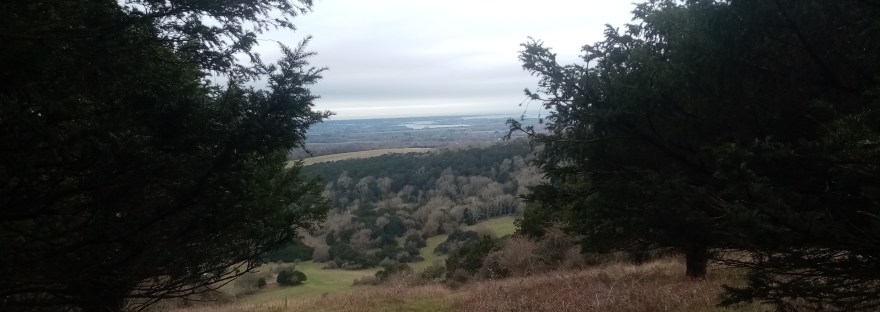
I have been visiting my Mum near Chichester and by chance discovered Kingley Vale nature reserve. It was a real eye opener to me because I was not aware that in the South-East some climax vegetation could be yew woodland. I was under the naieve impression that with the exception of a few areas where beech had taken a stronghold, such as in the Chilterns, oak was THE climax woodland here.

But at Kingley Vale this is not the case. On calcerous slopes yew can dominate sometimes replacing the relatively short-lived beech or simply adapting to the conditions from the start( I am sceptical of this but have no proof). I suspect there must have been some management during the last thousand years which has benefitted the yews especially given their status as a revered holy tree and of course their practical uses such as as longbows in archery.

Its an impressive sight to see them at a distance but almost more amazingly beneath the canopy, as though Tolkein’s necromancer had enchanted the forest, nothing grows under the trees except the poisonous dog’s mercury.

Infact, walking through the gnarled specimens is evocative of the feelings of enchantment conveyed by many woods in literature such as in Snow White or Hansel and Gretel.

Yew wood was much in demand in medieval times for archer’s longbows and arrows so the yew woods of Europe were much reduced so Kingley Vale is one of the biggest in Europe. Although to be honest it isn’t that big and much of the woodland in Europe, so I read, is mixed woodland containing some yew. There is also a yew plantation on the shores of Lock Lomond and in a few other sites in the North but it would seem that yew woodland is a horticultural delight of the South of England-hurrah!

The other interesting thing about yew trees is that they gradually hollow out so you cannot tell how old they are because the rings disappear. This creates some wildly optimistic guesses at the age of the trees and indeed it is often claimed that the yews at Kingley Vale were planted as a memorial for a battle between the Vikings and the Anglo-Saxons in the 9th century.

Whether it is haunted by dead Vikings and was the meeting place for druids is possible but in any case I won’t be cutting mistletoe with a golden sickle from the light of the moon there…..