How would you describe Paradise?

I recently watched a Youtube clip of an interview with Laurie Lee. In it the presenter asked ‘What is paradise for you?’ to which she answered her own question by saying it was( to her) a series of joyous moments all occurring in quick succession such as when she walked with her family under a starlit sky and her son said ‘This is darkness….’

In the last few months like so many people I have had to contemplate the very real possibility of the mortality of those that are dear to me including myself. It is difficult to have faith in such situations when there is so much suffering all around us. This ties in with the tricky subject of overpopulation. There may well be too many people in the world but death and especially death via coronavirus is a terrifyingly sad subject.

But can any death be dignified, spiritual and without terror? Ofcourse we all hope for it on our own terms but I think we rarely get it. For example, George Orwell described the look of terror on a fellow inmate of the hospital he was in in Paris when he died in the bed next to him of natural causes.

Anyway, returning to the concept of paradise. If my paradise was to be of my own making it would consist of the series of joyous moments all strung together like the TV presenter described above.

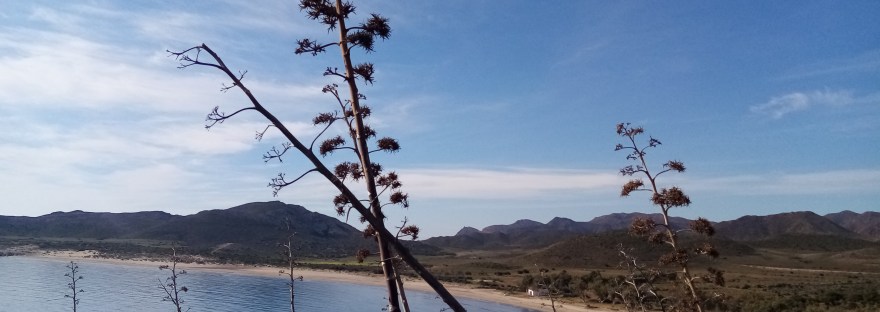
For me that would consist of finding a deserted beach with pristine sand and crystal clear water on the Spanish coast or sitting next to a man and his little daughter on a bench overlooking St Pauls cathedral in Nunhead cemetery as they ate piping hot fish and chips whilst stamping their feet on the frosted ground. Or walking as children with my father to our local pub in Hunstanton on a blowy autumn evening along the wave battered beach making Hound of the Baskerville howls as we went. Or returning from a long bike ride through the green lanes of North Norfolk on a late summer day to a cooling elderflower presse.

Ultimately, I don’t know if paradise exists but every glimpse of it when we are happy and well should be treasured because you never know what is round the corner….

And Now for Something Completely Different!

A Little bit of Travel- Remembering Sagunto, Valencia District

It seems a world away that just a couple of months ago I was enjoying the delights of Spain. Sadly, it seems the world has changed forever since then….

I saw many interesting and beautiful places when I was in Spain. I did not single out Sagunto because it was the most beautiful place or indeed the most enjoyable place as I received a largely frosty reception. But there is no doubt that Sagunto which is not far from Valencia was by far the most fascinating place I have been to.

Sagunto has gone through many different phases in it’s evolution. Intially, it was ruled by the Greeks then by the Romans followed by the Muslims. From then until 1492 it was dominated by the Jews until their expulsion on that date.

As a result it has an impressive Muslim fortress on the hill above the town, a sprawling Jewish Old Quarter and cemetery dug into the hill as well as a Roman road and forum. There are also many lovely medieval churches in the style of the one pictured and even a Temple of Diana.

And yet there is another Sagunto between the Old town and the down at heel seaside resort on the coast a few miles away. It is without doubt the most depressingly windswept and barren place in Spain consisting of a semi-industrial sprawl of shopping malls, second hand car parts yards and petrol stations. As I saw it out of the bus window on my way to the beach my mouth dropped open in disbelief.

When you combine this with the dishevelled state of the streets immediately around the Old Town with it’s dogshit, litter and graffiti you have to wonder why the people of Sagunto care so little about their little town when it has so much potential.

In other parts of Europe they would see the wonderful historic sites of this town as a gold mine for a tourist bonanza but here I got into all the monuments for free and only saw one restaurant that I would have risked going into.

Thanks to Rick Stein’s food programmes on Spain and my long lasting friendship with a resident of Malaga I have been guilty of romanticizing Spain and flattering myself that I understood something of it. But infact having visited Sagunto and some of the other less touristy places along the South coast of Spain I realized that I did not understand the Spanish mentality at all despite being continually intrigued by it.

A Little bit of Cricket- The most memorable sixes I have hit!

In cricket the maximum score per ball is 6 runs. It has a certain aura about it rather like a home run in baseball.

Here I include the four favourite sixes that I have hit-

  1. I was playing for Hunstanton in a Norfolk Sunday league against Thetford and was dispatching some cafeteria bowling to all parts. The bowler bowled a succession of long hops,full tosses and half volleys before finally bowling me a shoulder high full toss wide outside the off stump. To uppercut it ,because the bowler was miltary medium, was a free shot and I really got under it so it cleared the short third man boundary. Unfortunately, it hit a car roof causing a massive dent for which Thetford cricket club were not insured (as cars are parked at the owners own risk). The owner, Jerry was our only supporter and after that regrettable incident he never came again!
  2. Moving swiftly on- the biggest six I ever hit was against a village team in Wiltshire when we were touring there. The bowler lobbed up the perfect full toss, right in my arc, probably with a glace cherry on top and I swung as hard as I could timing it perfectly. Not only did it clear the boundary and my team-mates but it was eventually found in the garden of the house opposite the cricket ground. With due modesty I would say that even Chris Gayle, the West Indian big hitting batsmen, would have been proud of that!
  3. Again returning to league cricket in Norfolk we were playing a team that was top of the league whilst we were fighting relegation. In the usual way that season we lost the toss and they posted 220 odd. They had us four wickets down for under 50 at which stage they became extremely arrogant and overconfident. As a result our Indian overseas player( who they abused throughout) and I put on a massive stand. We could not win the game but 90% of their total would count as a winning draw and we would share the points- a victory in itself. It emerged that we needed 6 off the last ball. I was facing and the captain bowled a half volley which I dispatched over the fat vice captain’s head ,at deep mid-on, for six. It was the highlight of my career to see such a wrong righted (and remember I have played and won with my school in the Harrow vs Eton match at Lords).
  4. Finally there was the more recent occasion in a game where we were chasing but eventually  lost  a game against Matfield in Kent where I hit 3 sixes in an over including one that made the president of the opposition, none other the former England cricketer Derek Underwood, fall off his deck-chair. It was with immense pleasure that I accepted his compliment in the pub afterwards that ‘I could play a bit…’
  5. As I said hitting sixes is special and can make people who you normally wouldn’t get on with treat you with awe and respect and that is a very special feeling.

A Little bit of Food- A acknowledgement of the deliciousness of the humble onion and potato

The onion and potato are perhaps the cheapest vegetables to buy in the supermarket because much of their production can be mechanized. This of course lowers the cost (and often quality) to the extent that many people fail to appreciate what a culinary delight they can be if of good quality and well cooked.

Simon Hopkinson made the brave step of including a recipe for boiled onions in one of his cookbooks and since he is a widely respected chef I think that is testament enough to how good they are.

From my own experience the sweet, white onions of the Cevennes are such a gourmet addition to the base of any stew because they can perfume it with their sweet flavour.

Similarly, having gorged on the French street food snack ,Pissaladiere (which consists of a pizza base,slowly fried onions and olives) in Vallarius, just off the Cote d’Azur I can state categorically that there is nothing I’d rather eat when I’m lucky enough to be in the South of France.

In San Remo, just over the border in Italy, they have a number of variations of Pissaladiere served up in a San Remo take away hole in the wall which is something of an institution although ,alas, I have forgotten it’s name. My favourite ‘pizza’ was called a Sardinere, which if I remember rightly had olives,onions,anchovies and tomato sauce on foccacia drizzled with olive oil.

In regard to potatoes- crispy roast potatoes can enhance even the dullest meat on a Sunday roast. Also, Dauphinoise potatoes and salad is the cheapest and most delicious vegetarian meal I can think of to say nothing of salmon, boiled jersey royals and watercress followed by strawberries and cream on a sunny May day.

Finally, where would steak be without chips or beef stew without creamy mash? And I haven’t even talked about the nutritional benefits of either of these much abused vegetables! I rest my case….

Reminiscing in Isolation about a Happy Childhood- a Few More Snippets from The Cottage Gardener

Perhaps now more than at any time during the last 30 years we are all looking for ways to transcend isolation.

Reminiscing about happier times is perhaps more natural now than at any other time as the hawks seem to be swirling above London.

Coming Home

I wanted to write about that peculiar feeling we all get after a long journey as we approach home. More specifically the satisfaction it gives you as you see the familiar surroundings of home after the strangeness of far away places. In my childhood this meant bicycling to Ringstead on a 5 mile trip through the park but it felt like I had travelled much, much further through different landscapes with different people and customs. Alas, globalization has changed our perception of what is exotic and exciting to such a degree with cheap air travel.

In Norfolk I used to get that  familiar feeling as I came down Chapel bank from Hunstanton to Old Hunstanton. First, there would be a narrow road with big hedges on both sides with sparrows flying between them. Then the big beech tree where you turned right onto the footpath into the wood with naturalized Alexanders on both sides. Past the gardener’s cottage and compost bins and down the path with spots of sunlight in summer and coarse, large nettles stinging your legs as you hurried onto the gate and duck pond.

Then St Mary’s church spire appears with the St George’s flag and through another gate (close to Colonel Hamer’s hollyhocks) and into a small alley of yews in the churchyard. This lead to the graveyard with smugglers’ graves and a big mound like , as we imagined as children, a giant had been buried there. Through another gate under the old apple tree and through the long grass of eight oak field. Under the fence and through the pine plantation to the wobbly bridge with the quacking of ducks and scuttling of the big feet of moorhens. Finally, a bank of primroses, cowslips and daffs under a statuesque Scots pine by the old ice-house before arriving at the almond tree and gravel infront of the Clocktower. The home I shall always dream about.

But coming home here in East Dulwich is no less romantic. As I reach the ‘crest’ of Upland road I can see down onto Canary Wharf lit up in all its splendour for the residents of the ‘little Alps’ of South London to see as they stumble home from the pub or more likely work.

It makes me feel very much part of London without actually having the deal with it’s ferocity (we can see the stars in Dulwich!).

Jeeves and The Impending Doom

The greatest literary connection to the part of Old Hunstanton that my family home, The Clocktower is in is with P.G Wodehouse ( who wrote the famous series of Jeeves and Wooster books).

Apparently he often stayed at Old Hunstanton Hall and used the eccentric aristocratic way the house was run as a template for some of the other stately homes that he used in his books such as that of Bertie’s formidable Aunt Agatha’s Steeple Bumpleigh.

But recently I discovered a very short book of his that directly references a very distinctive building in the grounds of Old Hunstanton Hall called The Octagon.

The Octagon is a smallish building that is on an island surrounded by the water of a small spring that starts close-by in the park called The Bishops Bath. It was suggested that one of the ancestors of the Le Strange family , who have owned the estate since the days of William the Conqueror, built it to practice the violin because his wife could not stand the noise he made when playing it.

Anyway, P.G Wodehouse playfully used the building for a scene in the book- Jeeves and the Impending Doom in which the hapless Bertie is stranded with the cabinet minister on the top of the Octagon having been attacked by a very territorial swan. As usual Jeeves comes to rescue by disarming the swan with an umbrella.

The book is the usual parody of the way the upper class British society was pre-second world war but it is such a coincidence to have such an obscure but personal connection to such a well known and celebrated author.

Big Pants

Perhaps the most popular snippet in my book, Down The Garden Path( published in 2019) was the reference to Lady Chatterley and her game-keeper friend. Of course, it actually has very little to do with gardening but its amazing what a little bit of smut can do to book sales!

So to elaborate on the theme and to justify its inclusion in the book as referenced from my childhood I will add this- when I was growing up in Norfolk I used to spend a lot of time cycling (illegally) through the old park of Hunstanton Hall. The fear was that Sadler, the game-keeper, would catch me and have a few stern words to say.

In fact he wasn’t really that interested as long as you left his pheasants alone. He did make a pretence of being cross but there were never any real consequences.

Unfortunately, the new game-keeper when Sadler passed on was much more fascist in his outlook and one meeting with him made me realize( as an adult) that I better not trespass in the park unless I wanted to be shot.

Looking back on it perhaps Sadler’s mind was on other things. My mum thought it was hilarious (when we cycled past his cottage) that the washing line outside was strung up with an assortment of big knickers ,probably alongside the compulsory rabbits, as smoke curled from the chimney.

Ironically, I discovered that these matched the selection offered in the Warehouse Clearance shop in Hunstanton. I do not want you to think I spend my whole time browsing the ladieswear section of the fine shopping establishments of Hunstanton but there you are….

If you are interested in purchasing my book with all sorts of memories of this sort in it I can send it to you , if you live in the UK, for £6.50 including P+P. If you live abroad or prefer the convenience of Amazon then here is the link to buy the book-

https://www.amazon.co.uk/Down-Garden-Path-Snippets-Gardener/dp/1527238334/ref=sr_1_1?dchild=1&keywords=down+the+garden+path+sam+macdonald&qid=1585817053&sr=8-1
Further Down the Garden Path- a Few More Snippets from The Cottage Gardener

Asking for a discount at The Garden Centre

In England its often a good idea, as a professional gardener, to ask for a trade discount at the garden centre. Its usually 10% because you are likely to go there quite a lot if you’re a professional and thus spend a significant sum.

Anyway, I was helping a friend in France with his garden and as a result bought about 100 euros worth of plants from the garden centre there. Unfortunately, I was rather overzealous in trying to persuade my friend to ask for a discount. This irritated the owner greatly (the French are experts in being bolshy) but to our great surprise gave us a tender cyclamen worth about 10 euro.

What we were supposed to do with a pink cyclamen houseplant was another question altogether. Its not really the sort of thing men , if they’re not gay at least, would see any point in having. There then came the absurd situation where Lou said ‘well its your commission- you keep the damned thing…’ to which I replied ‘What can I possibly do with something like that?’ ‘Well, you could give it to that old witch at the village shop…!’

After that I decided I wouldn’t ask for a commission in French garden centres anymore…

Salthouse Church

I have referred to many East Anglian churches in my book but Salthouse church deserves a special mention. It is slightly up the hill from the beach and the delicious lobster salad at Cookies Crab Shack.

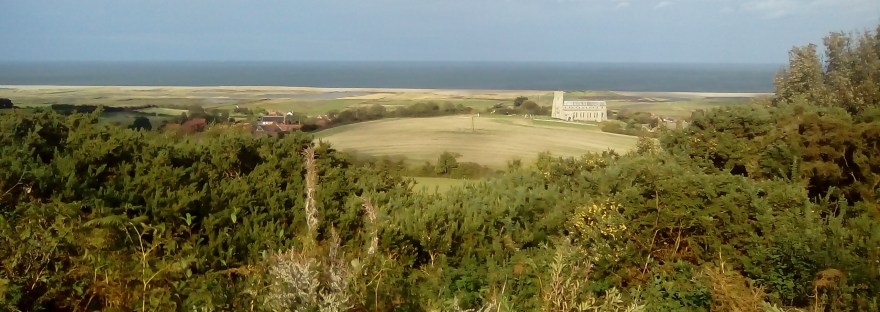
As a result it seems to occupy the role of a lighthouse because it is so close to sea but perched majestically above it and thus when lit up could guide ships in the night( it is pictured in the featured image).

Its proximity to the sea also means that when a storm whips up the church whistles and rattles in the most evocative way. This poetic influence on the artistic community has resulted in some very good exhibitions being held inside it which is unusual for rural East Anglian churches….

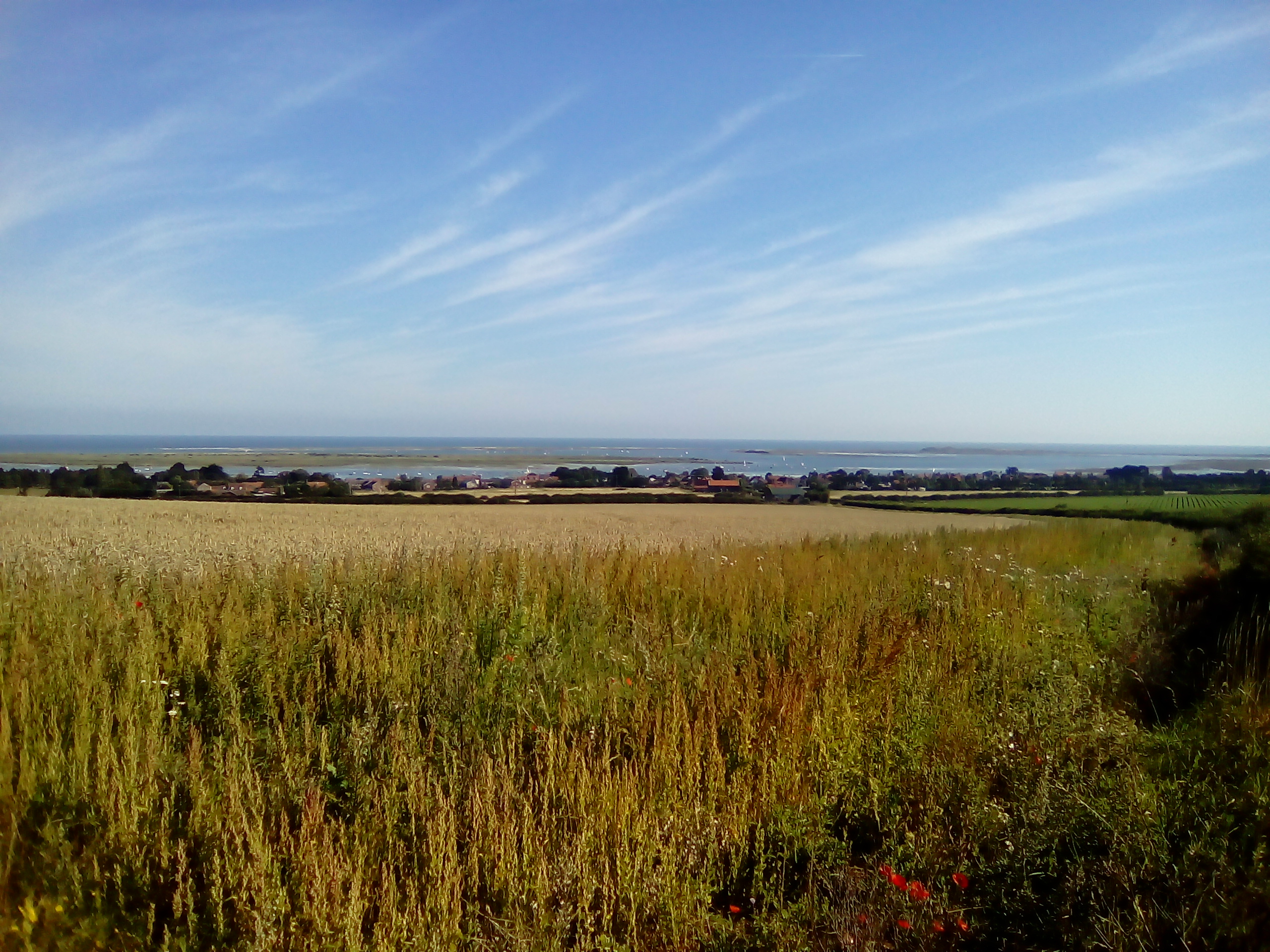
Furthermore, the track leading up to it is much like an ancient holloway with gnarled oaks covered in ivy on both sides of a sunken path. The heath above affords an excellent view of the church framed by the sea with only the goats who graze that gorse covered hilltop for company.

The Over-Sold Garden Design

I have recently completed a course in garden design. Prior to becoming a lecturer the woman who taught us had worked for a big firm of landscape architects. She described the perverse situation where they would pitch the most creative and elaborate designs to the council in order to get the project.

However, because of the severe budget constraints the council were tied by they would rarely ever realize any of the blue skies thinking they had envisaged in the actual project.

I can imagine a mood board( the pictorial inspiration for any design which is grouped together on a piece of A2 card) taking inspiration from a Vermeer painting , for example. Only for the project to manifest itself 5 years later in some scruffy grass and badly pruned trees!

Belgravia potatoes

I had a client in Belgravia who used to joke about growing new potatoes in his small back garden. The idea of ‘The Good Life’ in Belgravia which had ,at that time, the highest land cost per metre square in the world is quite out of keeping with the sophisticated ornamental gardens in that area….

But this was a time when the grow your own movement had re-surfaced thanks to various celebrity chefs and people were using all kinds of bits of land to grow vegetables on. But the idea of doing such a thing in Belgravia with pigs in the front basement and a extremely messy allotment in the back is ofcourse more than a little funny. Perhaps he could have sold the potatoes to the local and extremely smart cafe called Dalesford Organic calling them “local Belgravia potatoes” and charging £25 per kilo!


A Tribute to the Chilterns

The Chilterns offers the perfect bit of countryside for Londoners. It is about 30 miles from London to my favourite bit of the Chilterns and you can reach it very quickly and relatively inexpensively from the toy-town miniature Marylebone station. A station I did not know existed until relatively recently such is the labyrinth that is London.

It contains a lot of beech woodland on the higher ground that can be a delicious lime green in early summer and more than a little creepy in the winter when the skeletal shape of these trees is revealed. In fact, so creepy is it that it is thought that it was the basis for The Wild Wood in Wind in The Willows because the Chilterns are not that far from the stretch of river around Marlow that it is thought Kenneth Graham used as the basis of the book….

The relative wildness of the Chilterns is brought about by the fact that it was densely wooded and at a slight elevation. Therefore in previous centuries it was a haunt of highwaymen looking to relieve wealthy people of the valuables. This wildness has stayed with it as some parts still retain the interlocking mixture of commons and woods that the normal people of this area campaigned so hard to preserve.

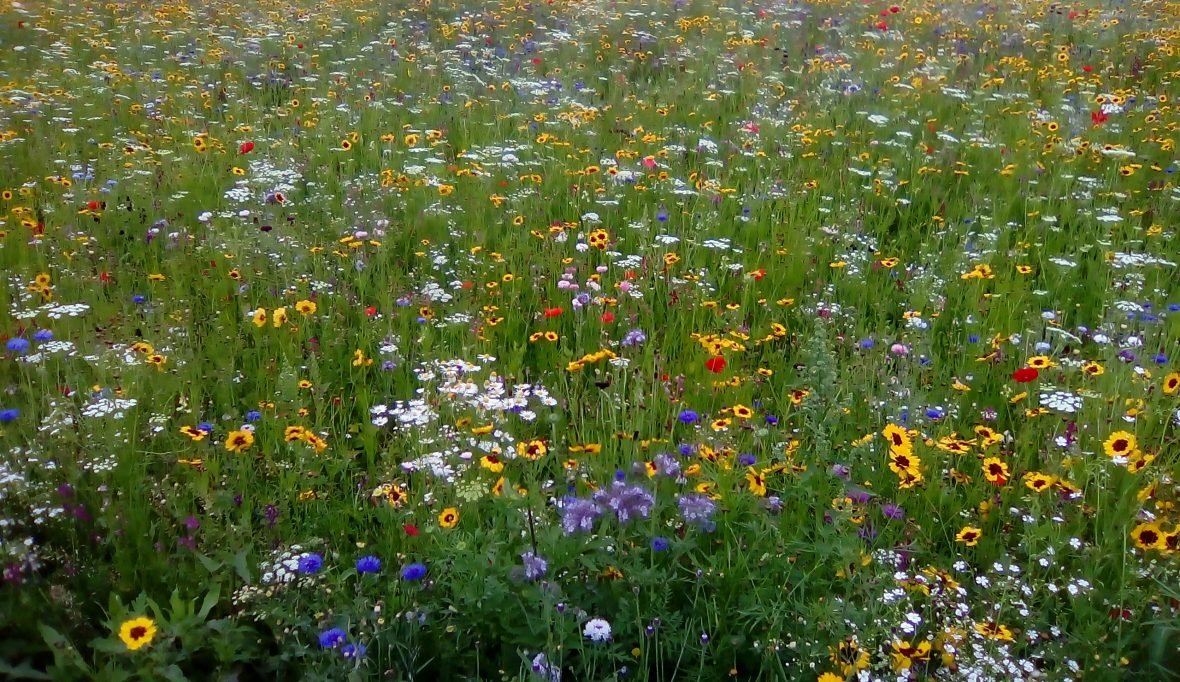
Intertwined with this is the abundance of chalk grassland that has been relatively well managed allowing a mix of wild flowers and native fauna to intermingle with the long grass. As a result of this when the red kite was re-introduced into this area a few decades ago it has thrived because of the abundance of small mammals in this grassland. This was brought home to me on a summer walk when I walked through one of the unspoilt valleys near Saunderton station to see up to 10 red kites soaring in the cloudless sky. As I had just eaten some wild white currants whilst browsing off some bushes planted by a kindly Chilternaise I was naturally feeling extremely happy on that cloudless day in July. If only walks in the English countryside were always as enjoyable.

There is also a good deal of traditional farming in the Chilterns- both arable and livestock and this adds to its appeal despite the encroachments of the car and town. But perhaps the most interesting thing about the beech woods of the Chilterns is that its major commercial centre, High Wycombe started as a centre of furniture making which was thriving until relatively recently.

So all I can say is- next time you are thinking of going to the seaside in those special days of high summer why not try a trip to the Chilterns instead? If you plan your trip carefully you will not be disappointed I promise!