A contrast between the flower growing industries of Grasse and San Remo

Some of my more cynical friends might have claimed that I went to the French Riviera just so I could strut around in my deck shoes with a cardigan tied around my neck in Antibes.

In fact, the favourable climate of both rivieras is ideal for flower cultivation which is what mainly interested me. Both the Italian and French riviera have made use of this for the cultivation of flowers but for different ends. And now as globalization takes hold the Italian cut flower industry is seemingly in terminal decline whilst the French perfume industry goes from strength to strength. The revenue of the perfume industry in Grasse was estimated at 1.32 billion dollars in 2010 whilst the man who showed me round the museum of flowers in San Remo indicated that the cut flower industry of the Italian side was worth about one tenth of its value in the 1980s.

Such is it’s decline that the modern purpose built flower market just outside San Remo has a large area used for children to play volleyball instead of selling cut flowers. What is the reason for this? Well like all industries in the developed world you need to add value to whatever product you sell. If it is just cut flowers in an area of high land prices and labour costs then it makes more sense to either find a new industry or relocate to somewhere with similarly favourable weather conditions but lower costs like Kenya or Colombia. As I have already said this is a trend being repeated in all industries not just horticulture and I for one find it very sad.

But you have to admire the French in Grasse or Burgundy say. Such is their skill in creating perfume or wine that they have added an incredible amount of value to simple agricultural products such as lavender or grapes. In Grasse such has been the success of the industry there that, like a sort of silicon valley for IT products, other big perfume companies from Switzerland and the USA have got offices there. And remember this is in a changing world where very few natural perfume essences are still sourced in Grasse.

If we were to have a bit of blue skies thinking here in Britain it would be nice to think of ways to use what remains of our own horticultural and agricultural know-how in tandem with our favourable climate to create more products that can power our own economy. So lets raise a wee dram to a little bit of blue skies thinking from the balmy Mediterranean…

A Christmas Special from The Cottage Gardener

As the festive season draws ever closer I am using this opportunity to promote my book, Down The Garden Path- snippets from the Cottage Gardener.

As winter is now practically upon us I include some of the  horticultural snippets that are most appropriate for that season. The book is of course available on Amazon but you can buy it direct from me at sammacdonald3@hotmail.com. Until the 14th of December I will be offering two copies for £15 instead of the standard price of £10 per book. As it is a slim volume it would make an excellent stocking-filler or as a light-hearted read for someone horticutural minded in front of the fire. Even if you aren’t interested please do share this link on facebook to anyone you think might be interested…

Also, do have a look (and like!)  my facebook page http://www.facebook.com/claphamcottagegardener where I have recented posted some horticultural highlights of my time in Burgundy and The French and Italian rivieras…

Champagne and Ghost stories are closely linked to Christmas but there are few plants in flower except the slightly mythical Christmas rose. So I include an early January favourite, the snowdrop as one of my favourite plants not just from winter but from the whole year. I hope you enjoy…..

Champagne

                   The English wine industry has a bad reputation which is slowly improving. But apparently the best English wines are the sparkling white wines, a.k.a English champagne. This is because the chalk ridge that stretches over northern France goes through the channel and emerges on the south coast of England. In theory the terroir, which makes champagne so unique, is very similar to the south-eastern counties of England. In addition, the average temperature and rainfall are very similar. So why not?

Well, it’s all a matter of branding. The French make the best sparkling wine and we know that because everyone drinks Champagne at Christmas — if they can afford it. Otherwise they stay with the Continent and drink Prosecco! Even if English wines were as good, I don’t think people would drink them as a luxury item. This is because the best English wines are as expensive as Champagne but without the reputation of being a special treat.

This brings me onto a colleague who, every time he visited a certain client of mine, was paranoid that they thought he was eyeing up their bottles of champagne in the garage (which we walked through to access the garden).

Anyway, I’d popped out and left him to his own devices when compelled by his inner desires said to himself aloud, “I could really do with a glass of Moët right now!” That would not have been a problem had the owner not been in the garage doing some laundry at that very moment!                             

Snowdrops (Galanthus spp.)(from the chapter ‘Plants I’ve known and loved’)

The snowdrop ranks highly, in my humble opinion, as a flower that cheers you up. Probably because they come at such an improbable time of year (late January/ early February), it causes them to be so well thought of. Like a clump of primroses, there is a sort of innocence and spring freshness about them as they hang like dainty little bells just above the partially frozen ground.

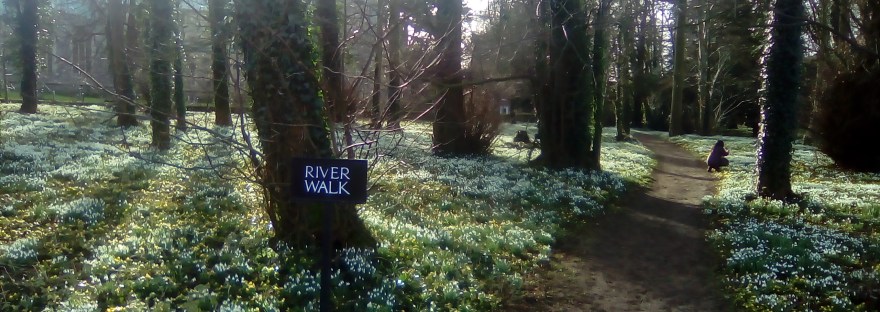
Galanthophilia takes this a bit too far though. I can´t get that excited about all the different types of snowdrops. Certainly not to the extent that I would pay £20 for a single bulb when they are a plentiful semi-wild plant. For example, at Walsingham Abbey Garden in Norfolk (between Wells and Fakenham) they have naturalized through acres of undulating woodland so it can look like a sea of white and tiny bells swaying gently in the breeze. This is because of the humus rich, constantly damp (but not waterlogged) soil which is slightly alkaline.  They have spread so much because the conditions are presumably so similar to their native habitat of south-eastern Europe and Asia Minor. Although it has taken them hundreds of years to do so because they were probably originally planted as a symbol of Candlemas; which was a festival to commemorate the purification of the Virgin Mary after childbirth. It was celebrated on the 2nd of February, when religious symbolism was at its height, in Medieval times.

A Ghost Story for Christmas

My sister introduced me to M.R. James (whose ghost stories were turned into a series of short films as Christmas specials) in the ‘70’s and in the 2010’s. His stories struck a chord with me because many of the films are set on the North Norfolk coast which I know intimately. His haunting description of solitude, particularly when walking on an empty beach, is familiar to East Anglians in particular but not exclusively.

Here is my own attempt at a horticultural ghost story for Christmas.

De Wynter was a very queer man. He lived in the ruins of what had been the great Harpingdon Hall, a rambling house with turrets and chimneys originating from the 16th century. He had squandered his inheritance on booze and was frequently seen glugging a bottle of wine in the overgrown gardens of the hall. There was only one employee left called Williams and he slept in the woodshed because he had nowhere else to go.

One day, De Wynter was stumbling about the gardens when he tripped and fell into the remains of what had been a very fine yew walk. Once he had composed himself he saw Williams coming towards him and said, “Cut these bloody trees down you oaf! Can’t you see they’re getting in my way!”

Williams replied, “But sir, you can’t cut these trees down. It’s bad luck. We don’t want evil spirits haunting us!”

“That’s all rot! Fetch me an axe!”

“No sir, I will not. They say the Gipsies lay offerings under the ancient yew at the end there to appease evil spirits and I don’t intend to offend the spirits myself.”

“Damn your eyes, man. If I was paying you anything I’d sack you.”

He staggered to the end and looked quizzically at the posies the Gipsies had left of dog rose (Rosa canina), old man’s beard (Clematis vitalba) and wild geranium(Geranium pratense). He kicked childishly at the pile, grinding the posies into dirt, and stomped back to the hall. Williams, having seen all this, looked worried but said nothing.

That night a great wind blew from the west and the trees shook loudly and vociferously in the park. It was almost as though they were singing together some tragic song.

De Wynter suddenly awoke from his drunken slumber and heard the singing. He looked out the window and could see many lighted candles held by someone or something moving around at the bottom of the driveway. It scared De Wynter no end and he rang the bell. Williams eventually arrived and said, “It’s the gipsies, sir. They are unhappy about what you have done. You must make an offering to the ancient yew or we shall be cursed for all eternity!”

De Wynter took him more seriously this time. He said, “Alright man. Tomorrow I will do so but get these flaming gippos back to Gipsy Green or I’ll set the dogs on them.”

Williams said, “They won’t go sir. I have already tried.”

And so all night the wind howled and the sound of singing and lights haunted De Wynter’s soul.

In the morning Williams brought him his breakfast but he seemed struck dumb and could not speak a single word. And so it was that the Gipsies returned for three more nights and each night De Wynter grew more and more haunted until finally on the fourth day Williams arrived with his master’s breakfast to find him gone without trace.

And so it is said that De Wynter’s soul was taken by the tree and that no one should tread in the gardens of the hall at night in case they should meet De Wynter’s evil spirit.
A few more extracts from my book-‘Down the Garden Path- Snippets from the Cottage Gardener.’

The Wild Cherry Tree

Cherry trees are very special landmarks in the countryside or people’s gardens, and the taste of a really good cherry is evocative of high summer. We had a wild cherry tree in our garden and I used to lick my lips all summer at the thought of my mum’s wild cherry ice cream. Wild cherries are very tart when raw but when cooked with sugar are utterly delicious.

It was a great sadness to me as a little boy when my parents said that they were going to cut the cherry tree down because it was too close to the house. I still feel sad about it however practical the reality of the situation was.

I did plant another cherry recently but it has not been nearly as successful; the birds always get the fruit. So the only time I get to eat really delicious cherries is when I go to Brogdale’s Cherry Fair in Kent, and oh my god, the cherries are fantastic. So many different types and colours, full of flavour because no thought is given to how they travel or are stored (like so many tasteless supermarket cherries). A personal favourite is called ‘Turkish Black’, which has very dark and quite small fruits, but a richness of flavour that’s just divine! Combine it with a trip to Broadstairs (for fish and chips) and you have a fantastic day out.

Wild Strawberries (Fragaria vesca)

Not only is the fruit of the wild strawberry extremely delicious, delicate and exclusive but also it makes an easy and versatile garden plant. This is because it has pretty Rosaceae shaped flowers in spring and attractive distinctive foliage throughout the year and is tolerant of a wild variety of soils and situations.

Similarly, its pure white flowers with their yellow centres combine well with the Snake’s-head fritillary (Fritillaria meleagris) in April to create an impressive springtime drift in herbaceous borders.

As if that’s not enough, being able to rummage around in the undergrowth in mid-summer and emerge with some wild strawberries from your own garden can seem very sophisticated. Indeed, one of my previous clients, who was a bit of snob, found it very satisfying to do this for his guests at barbeques. Often found growing wild in abandoned gardens and railway sidings and with a preference for chalky soil, wild strawberry plants are something I always take great pleasure in finding in the wild.

There is one slight problem with picking the fruit in that it must be completely ripe to taste delicious and it’s hard to get it at that precise moment. Still, it’s far superior to its bigger brother, that bland brute of a strawberry grown in polytunnels!

I would like to eat my wild strawberries in the same way as Gerald Durrell’s pet tortoise, Achilles, described in his book, My Family and Other Animals.

‘[Achilles] would become positively hysterical at the sight of them, lumbering to and fro, craning his head to see if you would give him any, gazing pleadingly with his boot button eyes. If you gave him a big one … he would grab the fruit and … stumble off at top speed until he reached a safe and secluded spot amongst the flower beds where he would … eat it at his leisure.’

Herb Bennet (Geum urbanum)

This plant is a seriously invasive weed. Still, I can’t completely weed it out because its flowers look so dainty and it seed-heads so attractive. I did notice last June in midsummer that all the herb bennet were seemingly flowering together and then the following week they all had seed-heads, which made me wonder whether they danced together all through the night on midsummer’s eve…

When I mentioned my liking for this plant to another gardener he also said he had a soft spot for it, because he had apparently watched a dormouse repeatedly bend the seed-heads over to collect the seeds for snacking on.

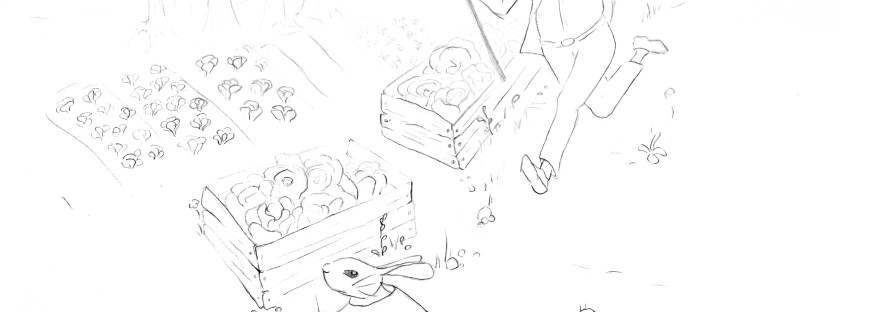
Foot-note- I include the image used for the snippet about the herb bennet plants dancing round the mid-summer fire. All of the 17 images in the book were drawn by the talented Anastasia Antonova.


Literary and artistic inspiration for my book- ‘Down the Garden Path-snippets from the Cottage Gardener.’

I wanted to give an insight into the pieces of film, art and literature that have influenced me most in the writing of my book. Like most people there a certain pieces of media that have stayed with me from my youth forging how I see the world. So here they are!

TV and film-

1)First there was the BBC version of Brideshead revisited(1981) that I watched with my father starring Jeremy Irons and Anthony Andrews- I think it is the first part( Et Arcadia in Ego) that caught my imagination because of the way it paints such a beautiful picture of the English countryside and Oxford university.

2) I was also influenced by the Mexican film ‘Like Water for Chocolate'(1992). Although the film is quite dated now; I was hugely impressed by the love Tita( the heroine of the film) used in her cooking to make the erotic dish of Quail with Rose petal sauce for her family causing an orgy at her sister’s wedding!

3) Robert Macfarlane’s beautiful portrait of the English Countryside in the BBC version of ‘The Wild Places of Essex’ (2009) encapsulates my own feelings about our own unique landscape which were caused largely by reading Richard Mabey’s classic ‘The Unofficial countryside'( 1973) which describes his wanderings in the outskirts of west London along the Metropolitan line.

Art 

I think the National gallery deserve some credit for allowing the British people access to an unbelievable selection of art work. It is particularly the Impressionists that have influenced how I garden and see the world by trying to see beauty in all aspects of life. I love Gauguin’s picture of the harvest in wheatfields, Van Gogh’s staggering beautiful pictures of the South of France and Monet’s waterlilies in Giverny, naturally. Also,  there are Pisarro’s pictures of South London and Sisley’s paintings of nature near Paris. Finally, a special mention must go to Constable’s accurate depiction of the Suffolk countryside in his paintings which I adore despite their formality compared to The Impressionists.

As Vincent Van Gogh said ‘I know nothing with any certainty but the sight of the stars makes me dream….’

Garden writers-

Christopher Lloyd’s book ‘The Well Tempered garden'(1973) is still the best modern book on gardening in England and I expect it will remain so for some time by answering the difficult scientific questions behind all kinds of  amateur gardening problems.

Beth Chatto’s book ‘The Dry Garden'(1978) will be a book with great longevity because it illustrates how to garden without too much labour or water. it ties in well with her other book ‘The Gravel Garden’ (2000) which has some beautiful pictures of her own gravel garden in Essex.

Robin Lane Fox’s ‘Thoughtful Gardening’ (2010) is a similar book to mine in that it is quite a light-hearted look at the aspects of gardening that he finds interesting. He is so knowledgeable and funny that it really is very enjoyable to read.

Writers about the Natural world-

Richard Mabey’s book ‘The Perfumier and the Stinkhorn’ (2011) is perhaps the most evocative short book which combines the seemingly distinct areas of science and romance. His book on ‘Weeds'(2012) is also extremely interesting and informative and as a young boy I used to read his book ‘Food for free’ (1972) nightly! I don’t think any other writer has influenced my attitude to the natural world and indeed gardening more than him…

Roger Deakin’s trilogy of books- Waterlog(1999), Wildwood- A journey through trees(2008) and Notes from Walnut Tree Farm(2009) has been very inspiring but I came to read him much later in my development as a naturalistic gardener.

Cookery writers-

Special mention must go to Nigel Slater’s book ‘Eating for England'(2008) which inspired the layout of this book. I loved the way he wrote little notes on the diverse array of English foods he had eaten and wanted to write a similar ode to gardening!

I hope you will find space on your favourite gardening books list for ‘Down the Garden Path-snippets from The Cottage Gardener.’!

Dipping into ‘Down the Garden Path.’

Smell of Turkish delight at The Chelsea Physic Garden

When I worked as a volunteer at the Chelsea Physic garden one of the first jobs they gave me was to take cuttings of their collection of pelargoniums. I found it quite an eye opener or ‘scent-sation’ you might say. ‘Attar of Roses’ was my favourite reminding me of the rare occasions I have eaten real Turkish delight with it rose flavour and scent infused into the icing sugar. But there were other scents too such as orange, old spice, peppermint and other smells I could not name but seemed somehow familiar.

Eating roses has always seemed a very sensual act to me. Having watched ‘Like Water for Chocolate’ I sought out some rose-petal jam that they sold on Edware Road and made Tita’s famous dish of ‘quail with rose-petal sauce’ for dinner. Luckily it did not have the same erotic effect on my family.

Speaking about the romance of food makes me think of the BBC production of Brideshead revisited where Sebastian Flyte and Charles Ryder share a box of strawberries and a bottle of Chateaux Peryraguey under an oak tree on a cloudless day in June. You could not hope for a better love-letter to the English countryside than that….

Weed or desirable plant

Its always bizarre what people, including myself, will buy from the garden centre. The truth is that very little information is given about what a plant will be like. Most of the time a purchase is based on how pretty the flowers of such and such a plant are without any consideration for what situation or soil a plant may like or its vigour. So for example if I was to dig up the bindweed on my allotment and potted it up with a small picture of its white ‘piss-pot’ flowers(Maybe I wouldn’t use that term!) and price it at £6.95 stating ‘vigorous, hardy perennial climber with beautiful pure white flowers’ how many people would buy it!?!

Lady Chatterley’s lover

I’ve always hoped that I might be someone’s bit of rough like Lady Chatterley’s gamekeeper friend. Unfortunately, I’m an ex-public schoolboy so perhaps that’s why the hope of grabbing hold of some creamy-white thighs with my muddied hands having brushed off the grass cuttings is not really a realistic fantasy!

Anyway, A few years ago I was a little too honest about this fantasy when at an unnamed country house with its own picturesque cricket ground, I asked my fellow cricketers if there were any ‘Lady Chatterley types hanging about.’ Only to notice that her Ladyship herself was a few feet away with her husband (presumably listening to every word I said)!

As you can imagine tea over the cucumber sandwiches in the Great Hall was a slightly awkward affair as I desperately tried to avoid making eye contact with her.

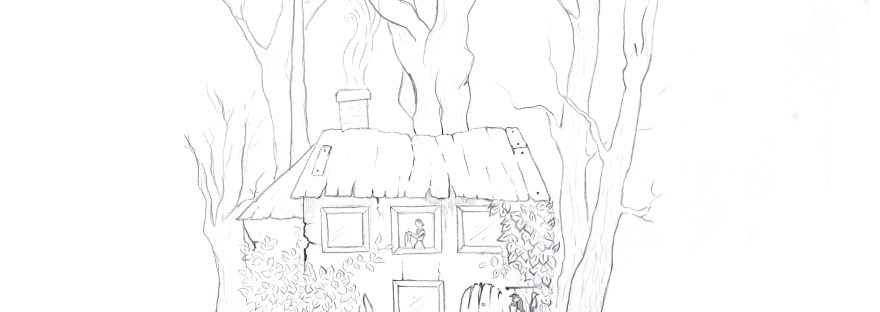
Post-script-The illustration of Lady Chatterley in her game-keepers cottage is included as the featured image for this article and there are 17 beautiful illustrations included in the book drawn by the talented Anastasia Antonova.