The focal point of my allotment from my point of view is the apple tree called ‘James Grieve’ at the front of the plot which has had abundant harvests of tasty fruit for the last two years around mid August time- before that the tree was a young whippersnapper and was not thinking about reproduction…..
Rather like the Tree of Life in the garden of Eden it represents the fecundity of the red clay of our Brixton allotment site surrounded by gritty, urban South London. Or at least it does to me…my neighbours have a different point of view seemingly having hacked back my plum tree without asking me and attempting to plant some dreadful miniature conifer in its place which unfortunately died(Ha!).
Another neighbour has taken up residence on the old rubbish dump, like some Womble cruelly displaced from Wimbledon, reclaiming land from the knotweed, couchgrass and broken glass with gusto (Bravo!). Nevertheless, his actions are a little surprising as he used to be the head gardener at The Chelsea Physic Garden, a very highly thought of garden in horticultural circles. Maybe they will call this offshoot The Chelsea Physic Garden at The Brixton Dump. Indeed, it is a slice of The Physic Garden in Chelsea with its raised beds, huge echiums and other exotic flowers but I doubt the good news of this Guerilla gardening would ever reach The Chelsea Physic Garden as Brixton is in another universe as far as they are concerned.
I am also not fully sure I understand why he would eat anything from that soil…..heaven knows what has been in there especially with all the foxes and cats running about. That being said the foxes do a grand job of keeping the birdies off my fruit bushes in high summer so they aren’t all bad.
The blackcurrants have been a raging success; encouraged by bucketloads of Dulwich stables’s finest horse muck. Although because the berries mature at different speeds and the fact that July is peak gardening season I rarely pick that many of them.
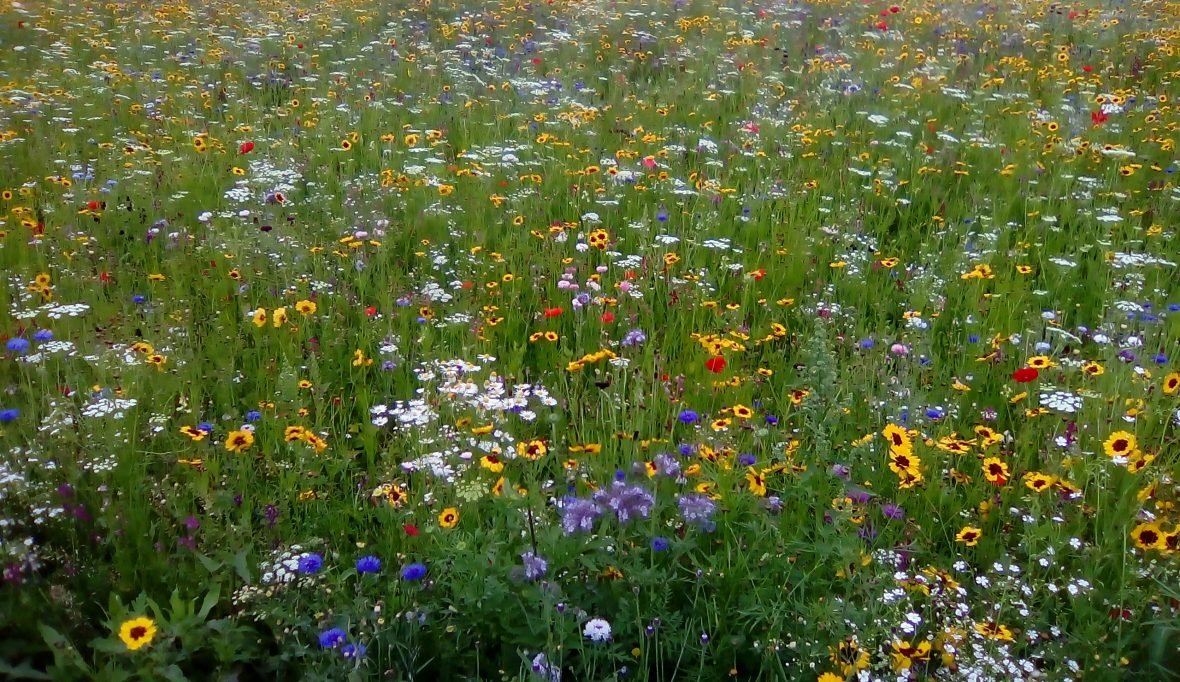
Apart from the apples and blackcurrants there have been few successes except some solid showings from green manures such as buckwheat (which my fellow allotmenteers did not recognize much to my hubris) and phacelia (this plant has a very pretty purple flower adored by bees).
My main success has been to develop a system of Lasagna gardening that saves my gardener’s back from heavy digging by layering organic matter such as leaves, grass cuttings, manure etc. on the soil and placing cardboard on top to discourage the weeds. It has been modestly successful tied to a method of rotating the plots for cultivation so they build up fertility in a similar vein to the way Amazonian Indians clear patches of rainforest, use them for a few years and then as the soil decreases in fertility allow nature to reclaim them and restore them to biodiversity.
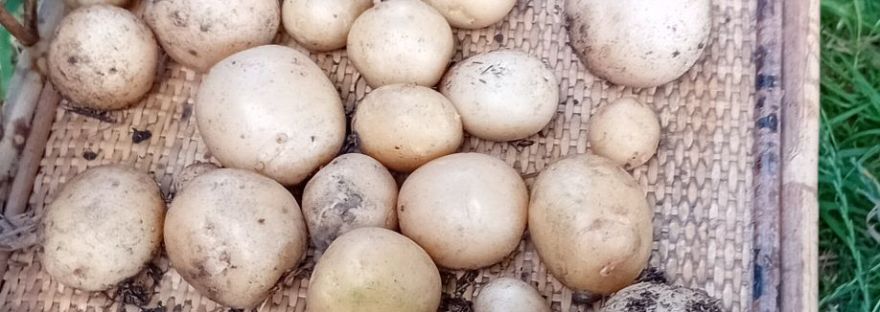
But actually in terms of vegetables- I, the champion vegetable grower (Monsieur ‘Poireaux’ MacDonald), is a pinprick of the horizon. The one major success I did have was growing Jersey Royal potatoes in the very early years of my allotmenteering. It was a mild spring so even though I planted the potatoes quite early, in mid-March, there were few hard frosts and then there was the right mixture of warmth and rain to ensure a bumper harvest of potatoes. The correct name for them is International Kidney, only when they are grown in Jersey’s rich soil are they allowed to be sold as Jersey Royals. Still I’m not selling them (just eating them!) and they grew so fast that I had many jacket potatoes stuffed with an assortment of bean and tomato stews with a Greek salad on the side to make even make the most Facist vegetarian coo in pleasure. My secret? Just beginners luck and more Dulwich stables’ finest although saying that it was a bit fresh so they did have a bit of scab…
Dare I admit my favourite thing to do at the allotment site is to listen to music, preferably The Lark Ascending, and watch my neighbours work. I usually sit in the shade of a huge sycamore in all seasons except winter and watch the birds, alas not the girls, float by.
Dare I admit in the wake of the cutting down of the sycamore tree on Hadrian’s wall at The Sycamore Gap (the scene of marriage proposals, picnics, lovemaking and god knows what else…) that the Sycamore is rather a common tree in London where the lack of sheep, which of course proliferate the fields of the North of England, mean that the seedlings are rarely grazed into oblivion. This means that places like railway sidings in London are often covered in sycamores.
Still its cooling, serene presence in all seasons is very calming so I can forgive it promiscuous nature through helicopter self sowing in the raspberry patch below and am glad that Thames Water’s laid back approach has meant that some over zealous allotmenteers ( including myself) have failed to execute this particular sycamore by shouting from the tree-tops ‘Cut it Down!’.
Of course, there are more sycamores at the wasteland at the back of the allotment site with an under-storey of brambles whose delicious blackberries have meant that it complements its layering shoots, barbed wire stems and aggressive root system with a self sowing apparatus that is frankly a gardener’s living hell.
I hope that this area can be tamed one day by an organic process and my fantasy is that I will buy a large quantity of the Japanese Loquat fruit from the Afghani fruit seller in Tooting and plant the stones through the wild wood that exists currently so that as climate change takes hold they will by succession turn the current area into an orchard with deliciously lemony apricot fruits. Whether they would be vigorous enough is unlikely although not impossible as I tried the process first in my own garden and some of the stones did germinate. Possibly they would not be quite vigorous enough to out compete the brambles but I would be there to lend a hand….
But I think it is necessary to day dream when you garden. Rarely will the results turn out as you hoped but the results may surprise more pragmatic gardeners.
 A gardener out of this world