A Few Snippets Here Celebrating Spring- Eternally a Time of Hope

Daffodils

Near where I live in Dulwich, at the Lordship Lane end of Friern road is a memorial to some civilians including children, who were killed by the infamous doodlebug bombs, whilst waiting for a bus during World War 2.

It’s a forgotten spot with a few small trees and scruffy grass where the buses wait before they return to central London. But in spring, at the time of greatest hope as life renews again in its cycle, it erupts with a beautiful display of golden miniature daffs. A fitting tribute to those innocent people that died there.

Despite daffodils being the national symbol of Wales, albeit a relatively new one it is Cornwall that is synonomous with daffodils in my mind, at least. They are still widely grown there commercially because the mild climate allows them to flower early for shipment to other parts of the UK. Indeed, the biggest daffodil farm in the world is opposite St Michael’s Mount near Penzance (4000 acres). The industry did take a bit of a battering during the 2nd World War when food production took centre stage and many different varieties of daffodil were thrown out into the hedgerows. Famously, in the Tamar valley near Plymouth the daffodil went the same way as mining and disappeared from the region with the wilding daffodils on the sides of the road the only reminder.

Further west in Cornwall, near Penzance whilst walking the coastal path between Mousehole and Lamorna Cove I was pleasantly surprised, in early March, to see many daffodils in the hedgerows flowering in the early spring sunshine with the more petite purple violets (with their faint old lady scent) skulking below. As Ted Hughes put it

‘ What a fleeting glance of the everlasting daffodils are…’

The sea is azure blue in Cornwall and the smash and grab of the raw Atlantic Ocean against the toothed cliffs is arresting. I’m sure John Le Carre thought so as he wrote in his cottage above the cliffs in Lamorna Cove. This pilgrimage of sorts to the place where some of the most profound dialogue I have read about human nature, love and the sad reality of life was something I had always wanted to do. And there were some stunning plants such as camellias in the steep sided valley leading to the cove but sadly the locals in the pub The Lamorna Wink were tight lipped about the real David Cornwell.

Anyway, Daffodils or Narcissi are named after the Greek god Narcissus because they seem to peer downwards, like Narcissus in his pool, and are so gay and bright that they probably would fall in love with themselves if they saw their own reflection like Narcissus. Perhaps that is why in the Granada production of Brideshead Revisited (after Sebastien is sick in Charles Ryder’s rooms) as an apology he fills his room with many different types of daffodils. Probably an appropriate symbol of homosexual love.

As Charles Ryder said he had been warned of the dangers of these rooms by his Cousin Jasper but said-

‘there were gillyflowers by his window that on warm summer evenings filled the room with scent…..

By gillyflower he means a scented flower but I’d always imagined he meant wallflowers which have their own connotations in courtship where it is used as a title for a number books in a type of whimsical romantic book of which there is a whole shelf at Dulwich library with names such ‘How to woo a wallflower.’

I have glanced through these books and given the content I can still flatter myself that if such dross gets published I may yet be a successful author even if my books are only read (as George Orwell put it) by desperate spinsters and the wives of fat tobacconists.

Madchester in the Spring Sunshine

When I told a friend that I was going on holiday to Manchester he looked puzzled. ‘Why?’ He said ‘To pay £100 a night for a B and B to watch the rain fall?’

Not to sound like Andy Burnham in a pitch to Michael Gove in order to get a few more quid for the levelling up fund but Manchester really is a great place now. Cosmopolitan, tolerant and even beautiful. So that rain cloud that brought the satanic mills to Manchester has now turned into an amazing rainbow of community although Im not sure Mancunians would put it quite like that.

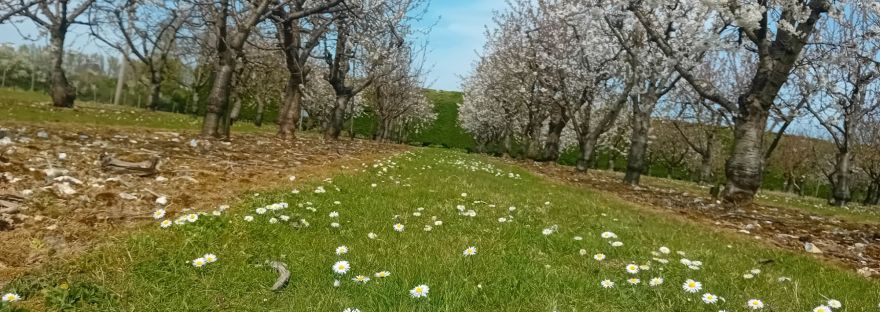
Anyway when I arrived in Manchester in April the sun was shining and I could see the cherry blossom in bloom round the compact but beautiful cathedral in the centre of Old Manchester from my hotel window.

The hotel is quite famous because the IRA have tried to blow it up twice. The bar downstairs is certainly not the sort of place I would linger although in the morning they did a damn good Eggs Benedict.

Obviously the hotel does not attract the most salubrious characters either as they asked for a picture of my credit card to secure my stay and were really disappointed when they discovered that my bank, also for security do not display my credit number on the card.

The room looked good in the pictures but they had only wallpapered one bit of the wall…conveniently the bit in the photo and the windows and bathroom were not in good condition at all. At least if I had done a Liam Gallagher and thrown the TV out the window and used the wallpaper as toilet paper it wouldn’t have been very expensive to replace them.

There was also a surreal moment when I was locked out of the hotel because they lock the front door to the hotel rooms as a security measure. What they failed to consider was that the stairs to the hotel were accessible from the bar area so all you had to was walk round from there. So I was let in by a roguish, pumped man who had nothing to do with the hotel and was just drinking in the bar. It was a bit like the scene from the film Snatch (2000) when the two black men in it hold up a bookies, shoot themselves and then get trapped behind a security door until the larger than life Tyrone comes to see what they are doing because he is their getaway driver and finds the door easily pushed open.

But there are plenty of other diversions in Manchester aside from the gay quarter which is ironically on Canal Street with a memorial to the brilliant (and incidentally gay) code breaker Alan Turing who was shamefully treated by the British government and was forced into committing suicide because of his sexuality.

There are also a number of beautiful Victorian buildings such as the University and Victorian baths near Oxford road, Bury Market and its black pudding, Salford and Coronation street with Morrissey’s Salford Lads club, Chorlton( posh Manchester) where more Guardian newspapers are sold than anywhere else. Finally there is Cheetham’s library where Karl Marx and Frederich Engels met and discussed the plight of the working man in Manchester when it was the centre of the industrial world. At that time in the golden age of empire it was run by the ironic collaboration of Jews and Germans, centred around the Cheetham Hill area of central Manchester, just behind Victoria station.

Cheetham’s library itself looks so old and creepy that the BBC adaption of The Tractath Middoth was set here in the 2013 which is the story of a cursed book that two relatives seek to obtain or retain their inheritance.

The most impressive feature of Manchester is the new garden near the cathedral which remembers those martyrs, mostly young people, who were tragically murdered by a suicide bomber in the 02 arena just outside Manchester in 2017.

I did shed a tear or two at the immaculately tended and tastefully planted 0 shaped memorial there for the pity of human existence because we never seem to stop hating and killing each other for so little reason.

Tulipmania

Mike Dash has written a fantastic book about the craze for tulips that gripped the Netherlands in the 17th century called Tulipmania which made some people fabulously wealthy and ruined others. He tells the story of the auction at Alkmaar in the North of the Netherlands where an orphanage auctioned off its collection of tulip bulbs for a fortune at the height of the boom. It is considered the first financial bubble of modern times and is thus still part of the syllabus for junior members of staff in the financial services industry.

But Dash also talks about the origins of the tulip bulbs in central Asia and how the Turks took it from Tienshan mountains in that region and how it became one of the most important flowers in Islam because of its tolerance of heat and cold and its beauty. Dash claims its virus streaked flowers were more beautiful than any modern hybrid.

The reason it is revered in the East is because it bows its head to the sky, seemingly in humility to God, which is a particularly evocative image. The original flowers were red and thus a symbol of undying love as it was said they sprung up from where a man killed himself after hearing his lover was dead.

And so it is natural that it would be in the gardens of heaven where faithful Muslims would live in the most beautiful gardens drinking the wine they were forbidden on earth passed to them by their own personal harem. As tulips have to be tended by gardeners it was stated in the oral tradition of the prophet Muhammed that all gardeners would go to heaven, which I am naturally delighted to hear.

But we also have our holy plants in Christendom. One particularly unusual one is the particular hawthorn (Crataegus monogyna ‘Biflora’) which grows on the hills at Glastonbury and flowers at Christmas as well as in the spring. It is said that it sprung from Joseph of Arimathea’s staff when he was passing through Glastonbury and that the Puritans tried to cut it down in a fit of fanaticism during the Reformation but the tree was saved by cuttings taken by local people.

Anyway, a sprig is always sent by the vicar of Glastonbury to the Monarch at Christmas like the tiny pineapples of The Lost Gardens of Heligan in Cornwall which were sent to Queen Victoria because they were so unusual.

Ofcourse this was a time when a pineapple didn’t cost £1 at the supermarket and were such an expensive luxury that some aristocrats included it in their coat and arms. Most amusingly, the Landmark Trust rent a property on a country estate in Scotland today that was built in the shape of a pineapple. A true folly!

But perhaps a certain kind of Tree of Knowledge can be found in the Botanical gardens at Cambridge. I don’t mean the apple tree apparently descended from the one that apparently dropped its fruit on Isaac Newton’s head but a semi-evergreen oak that keeps its leaves through winter…superficially a symbol of immortality but in fact probably a hybrid between an evergreen American oak and our own champion the English oak.

I can imagine in the pandemic someone like the writer Robert Macfarlane, the nature writer and  Don at Cambridge holding lectures under this great tree but I don’t know this for sure except that he did lecture outside. Certainly much knowledge has been imparted under this tree. I hope this doesn’t inspire some nihilist to cut it down because it is so symbolic; like the sycamore on The Sycamore Gap in Hadrian’s wall. Although, it was  heartening  to hear the outpouring of grief over a tree that is essentially a weed in the South East of England, most obviously on railway sidings much to the irritation of the accountants at British rail. Bring back Agent Orange, chimed the administrators!
Plants I’ve Known and Loved- Going over Old Ground

The current image has no alternative text. The file name is: ladyslipper-orchid.jpg


Almond trees

To show that I’m not a completely irrational tree-hugger I would say that I was never particularly fond of the almond tree that stood outside The Clocktower, my childhood home. It was a sickly thing and not easy to climb which was a significant point to a child obsessed with Just William who believed there are only 2 types of tree in the world- those that could be climbed and those that could not be climbed…

I can also not remember it flowering very well unlike the almond blossom with its background of rose tinted light captured in various Impressionist paintings that still inspire people to romanticize the South of France.

But ofcourse Almonds are much better suited to the Mediterranean climate found there and also in California which is now a centre for Almond production.

I was surprised to discover that Lubeck, a Hanseatic port of Northern Europe, with no almond production to my knowledge, has developed a reputation for producing top notch marzipan, including my personal favourite, Marzipan hot chocolate, consumed in the attractive cobbled square nearby.

Lubeck is a bit of a honeypot for tourists as it has managed to salvage the Hanseatic merchant houses from the machinations of the RAF. Hamburg ofcourse is beyond reproach in that regard but some Germans feel quite bitter about it when they see the dreaming spires of Oxford and Cambridge.

I was talking to the curate of St Mary’s church in Lubeck on this very subject and he described, in contrast to the horror of the war, the fact that his uncle James (an Englishman) was in a plane above Lubeck dropping ‘friendly’ bombs whilst his future wife was in the burning rubble of the town below as a prelude to their meeting and subsequent marriage. As is said in that great film Shawshank Redemption when the two lead actors meet again in the paradise of the Mexican Pacific coast ‘Hope is a good thing….perhaps the best of things…’

Not Much Room for a Mushroom

As I wrote in my first book I was very keen on foraging particularly for mushrooms in my younger days. This was inspired by the mushroom forays we went on in Thetford forest with the lengendary Peter Jordan, now sadly no longer with us. I learnt a lot and those walks filled with anticipation and excitement are still very clear in my mind even though they must have happened about 25 years ago now.

But such is the dulling influence of the supermarket aisle and lack of practice I have lost my confidence even when I heard that my godfather and his wife, Lif were having Karl Johannes(the Swedish word for Boletus) mushrooms again in East Yorkshire as a regular lunchtime treat. Lif used to grind the unused mushrooms into the lawn with her heel,when the mushrooms were beyond consumption, and it seemed to spread the spores sufficiently to keep the kitchen well supplied.

I think the final nail in the coffin so to speak, and fortunately it was not my coffin, was the recent incident when a woman served up Beef Wellington to her ex-husband’s family. Three of his relatives died after that meal whilst mysteriously she and her children survived unscathed which was a most suspicious set of circumstances given the acrimonious nature of their separation.

Rick Stein was always keen to point out how lacking in variety our diet is. A huge proportion of the world’s population is dependent on 3 crops; rice, wheat and maize. Yet there is so much variety and it is the same with the extent of the fungal kingdom, even if much of it is not edible, the diversity of species never ceases to amaze me.

For example, much like the horror film, Blood on the Devils Claw there is a species of mushroom that looks like claws emerging from a witches’ mushroom fungus and smells like rotting flesh to boot. It is called Clathrus archeri

Then there is the ghostly glow of the Jack o’ latern fungus (Omphalotus olearius) that does glow ‘Halloween Green’ in the dark although to the untrained eye, in the light, it can appear like chanterelles.

For those with a dentist phobia there are Hydnellum peckii mushrooms that resemble a tooth with drops of blood formed on it. I’m sure you are salivating at the prospect of these gastronomic delights just before you go out foraging yourself…..!

An English Gap Year

 Leif Bersweden spent his gap year summer going round the British Isles trying to see every one of the 52 species of Orchid that grow there. It was a hugely inspirational book; well written and funny as well as being informative.

The most important point about it was that it showed that wonder, even in the natural world, can be found below our very feet if we really look instead of having such a jaded palate that only the most exotic and exciting experiences can tickle our imagination.

In comparison, you might choose another more famous book about orchids written by Tom Harte-Dyke about how he went to the Darien Gap in Panama to look for orchids and how he got kidnapped before eventually escaping. A great book to read but in no way more interesting than doing such a thing at home, however brightly coloured or beautiful those tropical orchids were.

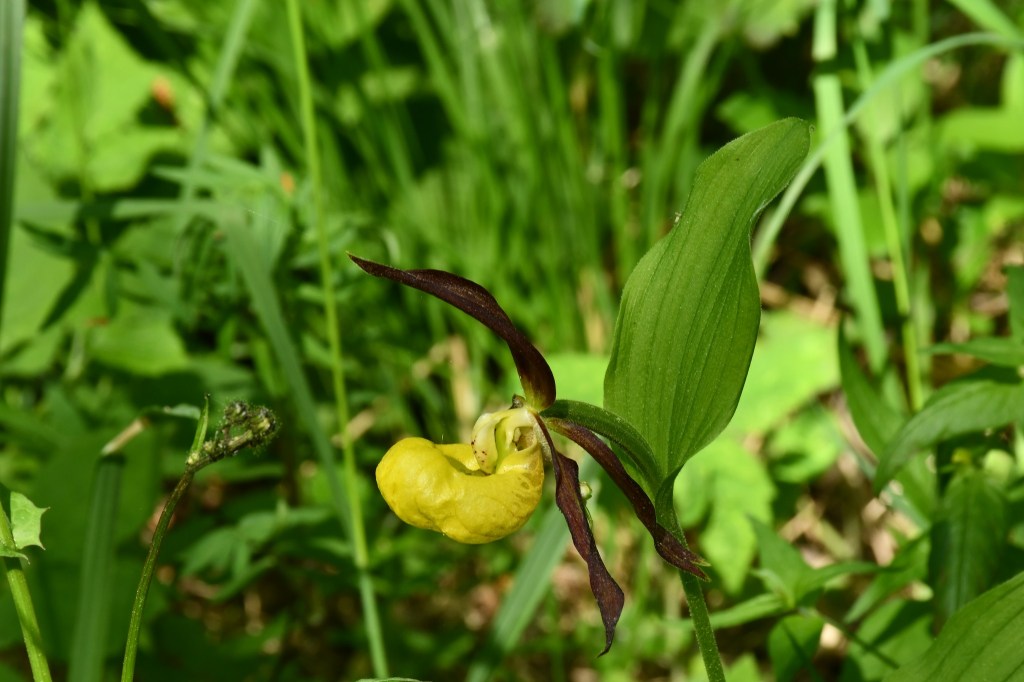
I was particularly excited by Bersweden’s description of the Lady’s slipper orchid (Cypripedium calceolus), saved from extinction by a group of stubborn Yorkshire naturalists when Victorian Orchidmania had stripped places were the Lady’s Slipper grows in Britain, such as the Yorkshire Dales bare. The plant was effectively put under decades of 24 hour surveillance in order to save it from pilfering hands.

The project has been quite successful as more plants have been raised from seed, encouraged to germinate by its tipple of Pineapple juice, so that it has been re- introduced to a few more sites in the North of England, whose lush grass, babbling brooks (although less so its nibbling sheep) make the perfect backdrop for such an exotic looking orchid which is red and yellow and not surprisingly in the shape of a slipper( picture at the beginning of the article- credit David Wilkinson). It also has an interesting pollination technique which looks carnivorous but is infact a way of forcing any pollinating insects to rub pollen off their backs at the entry to the flower.

Despite it being critically endangered in the British Isles the Lady’s Slipper’s cousin in Europe is more common. Nevertherless, it was with silent wonder, whilst visiting my friend known affectionately as Dodgy Dave in Estonia, that we entered a clearing in his woods near a small stream to find in all its glory a small colony of these orchids in full bloom. What’s more Dodgy Dave even kept his promise not to dig up the orchids to sell at the Sunday market in Tallinn or reveal their location so hopefully those orchids are alive and well.

Plants I’ve Known and Loved-Dreams and Realities of Allotment Time

The focal point of my allotment from my point of view is the apple tree called ‘James Grieve’ at the front of the plot which has had abundant harvests of tasty fruit for the last two years around mid August time- before that the tree was a young whippersnapper and was not thinking about reproduction…..

Rather like the Tree of Life in the garden of Eden it represents the fecundity of the red clay of our Brixton allotment site surrounded by gritty, urban South London. Or at least it does to me…my neighbours have a different point of view seemingly having hacked back my plum tree without asking me and attempting to plant some dreadful miniature conifer in its place which unfortunately died(Ha!).

Another neighbour has taken up residence on the old rubbish dump, like some Womble cruelly displaced from Wimbledon, reclaiming land from the knotweed, couchgrass and broken glass with gusto (Bravo!). Nevertheless, his actions are a little surprising as he used to be the head gardener at The Chelsea Physic Garden, a very highly thought of garden in horticultural circles. Maybe they will call this offshoot The Chelsea Physic Garden at The Brixton Dump. Indeed, it is a slice of The Physic Garden in Chelsea with its raised beds, huge echiums and other exotic flowers but I doubt the good news of this Guerilla gardening would ever reach The Chelsea Physic Garden as Brixton is in another universe as far as they are concerned.

I am also not fully sure I understand why he would eat anything from that soil…..heaven knows what has been in there especially with all the foxes and cats running about. That being said the foxes do a grand job of keeping the birdies off my fruit bushes in high summer so they aren’t all bad.

The blackcurrants have been a raging success; encouraged by bucketloads of Dulwich stables’s finest horse muck. Although because the berries mature at different speeds and the fact that July is peak gardening season I rarely pick that many of them.

Apart from the apples and blackcurrants there have been few successes except some solid showings from green manures such as buckwheat (which my fellow allotmenteers did not recognize much to my hubris) and phacelia (this plant has a very pretty purple flower adored by bees).

My main success has been to develop a system of Lasagna gardening that saves my gardener’s back from heavy digging by layering organic matter such as leaves, grass cuttings, manure etc. on the soil and placing cardboard on top to discourage the weeds. It has been modestly successful tied to a method of rotating the plots for cultivation so they build up fertility in a similar vein to the way Amazonian Indians clear patches of rainforest, use them for a few years and then as the soil decreases in fertility allow nature to reclaim them and restore them to biodiversity.

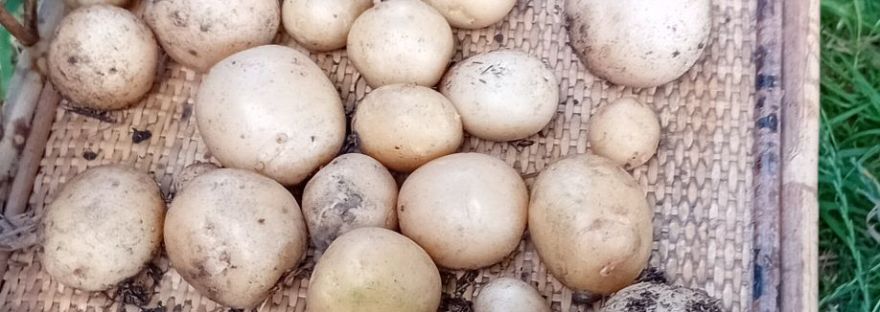
But actually in terms of vegetables- I, the champion vegetable grower (Monsieur ‘Poireaux’ MacDonald), is a pinprick of the horizon. The one major success I did have was growing Jersey Royal potatoes in the very early years of my allotmenteering. It was a mild spring so even though I planted the potatoes quite early, in mid-March, there were few hard frosts and then there was the right mixture of warmth and rain to ensure a bumper harvest of potatoes. The correct name for them is International Kidney, only when they are grown in Jersey’s rich soil are they allowed to be sold as Jersey Royals. Still I’m not selling them (just eating them!) and they grew so fast that I had many jacket potatoes stuffed with an assortment of bean and tomato stews with a Greek salad on the side to make even make the most Facist vegetarian coo in pleasure. My secret? Just beginners luck and more Dulwich stables’ finest although saying that it was a bit fresh so they did have a bit of scab…

Dare I admit my favourite thing to do at the allotment site is to listen to music, preferably The Lark Ascending, and watch my neighbours work. I usually sit in the shade of a huge sycamore in all seasons except winter and watch the birds, alas not the girls, float by.

Dare I admit in the wake of the cutting down of the sycamore tree on Hadrian’s wall at The Sycamore Gap (the scene of marriage proposals, picnics, lovemaking and god knows what else…) that the Sycamore is rather a common tree in London where the lack of sheep, which of course proliferate the fields of the North of England, mean that the seedlings are rarely grazed into oblivion. This means that places like railway sidings in London are often covered in sycamores.

Still its cooling, serene presence in all seasons is very calming so I can forgive it promiscuous nature through helicopter self sowing in the raspberry patch below and am glad that Thames Water’s laid back approach has meant that some over zealous allotmenteers ( including myself) have failed to execute this particular sycamore by shouting from the tree-tops ‘Cut it Down!’.

Of course, there are more sycamores at the wasteland at the back of the allotment site with an under-storey of brambles whose delicious blackberries have meant that it complements its layering shoots, barbed wire stems and aggressive root system with a self sowing apparatus that is frankly a gardener’s living hell.

I hope that this area can be tamed one day by an organic process and my fantasy is that I will buy a large quantity of the Japanese Loquat fruit from the Afghani fruit seller in Tooting and plant the stones through the wild wood that exists currently so that as climate change takes hold they will by succession turn the current area into an orchard with deliciously lemony apricot fruits. Whether they would be vigorous enough is unlikely although not impossible as I tried the process first in my own garden and some of the stones did germinate. Possibly they would not be quite vigorous enough to out compete the brambles but I would be there to lend a hand….

But I think it is necessary to day dream when you garden. Rarely will the results turn out as you hoped but the results may surprise more pragmatic gardeners.