Blog

Plants I’ve Known and Loved-Snippets from a Gardener, Traveller and Gourmand

Turnips

Turnips are not held in very high esteem by the British as a vegetable and more is the pity. Perhaps this dates back to the 18th century and ‘Turnip’ Townsend’s four field system of crop rotation which he began in Norfolk where turnips were grown over the winter to feed livestock.

The system was so successful that yields of all crops increased rapidly but perhaps meant that the turnip was pigeon-holed as not suitable for human consumption. Despite this when turnip greens are sold in Tooting vegetable sellers they are called English saag(spinach) a name I like very much although the turnips sold in Peckham Rye look less appealing. Rather like the devils balls you have to wonder where they have been before they arrived at the market.

Looking at those over-sized turnips rolling around in the detritus of a busy, urban place such as Peckham I can see why Sylvia Plath described them as ‘mute as a turnip’. But maybe she might have written poetically about them in the exotic surroundings of Peckham Rye with its sweetmeat and vegetable sellers, chaai-wallers, holy men and cheap cabs in a quasi-Kipling style.

The French, who call them navets, eat them in a delicious white sauce and the Portuguese use the tops in that warming winter soup of Caldo verde with potatoes, onions and bacon. Even the Americans are fond of them and probably have their boiled and buttered collard greens, which is what they call them, as in some Woody Allen fantasy, with freshly caught catfish fried near the swimming hole with Mary Lou or as  a side dish with deep fried chicken. Americans are famous for bastardizing other foods so I think I’m allowed to be a bit creative with the interpretation of authenticity in their food culture.

It was probably Baldrick, perhaps the most famous peasant scullion to have graced our screens, in the historically based TV series Blackadder which straddled the 1990s that put the final nail in the coffin of the hopes of turnips becoming fashionable. Baldrick was more than a little obsessed with buying a ‘Nice little turnip in the country..’ and when he spends the money Blackadder has persuaded the gullible Prince George the third to give him on a massive turnip Blackadder, in disgust, sticks it on his head. Such images definitely did influence popular culture back then when we were young but things are different now and perhaps with an uptick of interest in vegetarianism the humble turnip is due some sort of renaissance.

Marigolds

Among gardeners there is a certain amount of snobbery directed at marigolds and it is definitely a feeling I share to a large degree. In fact the huge bauble like marigolds of blindingly bright orange are the epitome of bad taste.

But perhaps the one saving grace of the marigold is that it is revered as a holy flower in Hindu culture and at the Day of the Dead festival in Central America. I often think of a TV programme called Ganges where I saw pilgrims being given necklaces of marigolds by the brahmins, in Benares, and containers of marigolds and candles floating down that holiest of rivers. The following scene in Ganges captured an extremely moving procession led by these aforementioned holy men with very spiritual chanting in it. So perhaps its more a question of the right plant for the right place. But definitely those fake British gardens with rows of tasteless flowers that pop up in the hill stations of India, as a reminder of the days of the Raj, are the wrong place.

The pot marigold is also revered in Christian culture as a symbol of the Virgin Mary to decorate church altars. Its latin name Calendula comes from the latin calendae meaning first day of the month because it bloomed every month of the year thus being useful for supplying the altar throughout the year. It is also known as the pot marigold because it was used as a cheap alternative to saffron in cooking.

Despite these positives the African marigold really is pretty dreadful and I fantasized that a top garden designer would attempt to convert his rich and tasteless clients into thinking that it was the must have plant to have in their gardens. This is what the character Miss Featherstone did in her column in a leading newspaper in Apartheid South Africa, in Tom Sharpe’s hilarious fictional book Riotous Assembly. Because she was an English aristo they assumed she had impeccable taste but because she thought the South Africans who read her column were very stupid to believe in Apartheid she created the most tasteless interior design tips for her readers because she guessed they did not have the sense to realize in what bad taste they were.

Of course I don’t treat my clients like fools. If they have the money to pay me invariably they have been successful in some field but usually because of the urban nature of the West have rarely done any gardening. The problem with that is that gardening is a creative science so there are not always distinct right or wrong answers to a question in the garden. Also, it is extremely pleasant to have some scope for creativity like a musician improvising….it can go wrong or can be the star of the show. Planting snakes-head fritillary bulbs in the lawn is a simple and not entirely original idea but it looks beautiful for that spring before the lawnmower says ‘ off with their heads’ Henry viii style in May.

Cucumbers

A not very interesting but little known fact about me is that both my flatmates have been Kiwis (New Zealanders) and both have absolutely hated cucumbers. No bad thing you might say given the questionable circumstances in which certain people, whose anonymity is very important to them, have ended up in A and E. Similarly, in Michael Palin’s semi-autobiographical film East of Ipswich: about the Suffolk seaside resort of Southwold in the repressed atmosphere of the 1950s, the only thing seemingly available at the guesthouse the main character is staying in is ironically cucumbers.

That being said I actually love cucumbers…to eat, I mean. In fact, it might form an important part of my favourite English summer menu of poached salmon and fresh mayonnaise, boiled pink fir apple potatoes and lightly dressed raw cucumber salad without its skin followed by the quintessentially English pudding of Cambridge Favourite strawberries, a little sugar and lemon juice and thick Jersey double cream.

I take it Roald Dahl didn’t like the cucumber when he created the snozzcumber as the disgusting vegetable that the Big Friendly Giant(BFG) eats in the book of  the same name. Certainly it is not nearly as delicious sounding as the BFG’s beverage of choice, Frobscottle, which tasted of a delicious mixture of raspberries, vanilla etc. I can understand with its spiny skin and bland taste why cucumbers aren’t peoples’ favourite vegetable but this demonization of it as the devil’s plaything does seem a little harsh in a culinary sense anyway……rather like comparing aubergines to cockroaches.

This summer I had deliciously cooling salads and beetroot soups in Lithuania and Poland of cucumber,dill and yoghurt in some very ordinary looking Lithuanian and Polish cafeterias that would stand toe to toe with the more famous Spanish salads and cold soups such as gazpacho and salmorejo.

And that is to say nothing of the most famous use of the cucumber, certainly in England, but possibly the world of the cucumber sandwiches served for afternoon tea. Victorian gentleman were so concerned by the reputation of these cucumber sandwiches for causing excess wind, perhaps because they did not share the BFG’s love of whizz-popping that it was not until a ‘Burpless’ variety was developed that they felt secure in eating those peculiarly English sandwiches without the fear of letting out a profondo belch.

And Some of My Favourite Places

The Holy Water at Walsingham

The Holy mile from the Slipper chapel in Houghton St Giles in Norfolk to Walsingham is considered one of the holiest places in England. Indeed it is referred to as England’s Nazareth. Perversely it has been recorded that Henry viii walked it barefoot (as is the custom) plus an extra mile from East Barsham where interestingly there is a massive hall which presumably would have met the wants of a king. But this was before he broke from Rome and dissolved the monasteries leaving Walsingham precariously placed. But gradually in more recent times it has returned as a place of pilgrimage not just for English Catholics but also the Tamil community in the UK. It obviously is not considered a place of pilgrimage in the same way of Lourdes with its huge hotels and cheap pizza joints and so has retained its dignity and thank goodness for that. And indeed the tiny stream that runs parallel to the road to Walsingham does have a spiritual quality to it particularly in the winter when the vegetation does not screen it from view and the sunlight slants in. I often drive along that road because it is such a curious place with a very unusual crowd of people walking along it including nuns of all ethnicities- very peculiar for monocultural Norfolk. On the other hand it was not quite as amusing as when I was at Lourdes when an Italian Nun, in Charles Manson style, starting strumming her guitar and singing with her entourage on the holy steps there.

Jokes aside I am intrigued by the stream at Walsingham. Just because it is not the biggest, most beautiful river does not mean that it is not the holy grail of water courses. Borrowing from Kim by Rudjard Kipling perhaps it really is the river of enlightenment where the arrow of learning fell partly because of its modesty. I think though that I am not going to bathe in it in the hope of either eternal youth or enlightenment. However, it would be nice to beautify it a bit more using the snowdrops that proliferate in the old Abbey gardens nearby in Walsingham village. With their whiteness glinting in the winter sun reflected off the quasi-religious river it would bring a bit of spirituality into even the most heathen heart.

A final note about the holy water. It is available free of charge from the shrine- a most unusually catholic reminder of what churches look like all the time in Catholic Europe. But again the temptation to charge has been resisted unlike the famous case of the Bedfordshire sect that successfully sold holy water all round the world for decades. What they actually did to it fascinates me more than anything. Was it just straight out of a tap or did they add something? The amazing thing about their sect is that it continued to exist even after their leader died despite her prophecy that she would, like Shiloh from the Bible, rule for a 1000 years. Perhaps like Del Boy’s river Peck water the traces of uranium in the Bedfordshire sect’s water gave its users a holy glow of enlightenment….

Striding through Yorkshire

I fell in love with the Yorkshire Dales when I went there in my twenties. I had been badly affected by various periods of bad mental health and was really very fragile. But Yorkshire offered a compromise between the exoticism of foreign lands and the familiarity of the South. The Dales, as I wrote in my first book, is a magically beautiful place. Verdantly green and pleasantly hilly it really feels like God’s own country. I liked the cheap beer and good, plentiful food and the way people would stop for a chat without saying they had to get on.

One particular incident stuck in my mind- I had found a copy of AJ Brown’s striding through Yorkshire. A love letter to walking through Yorkshire but with a practical edge. My copy was dedicated ‘To Frank from Marion’ in Christmas 1945- surely a time of great hope to begin exploring the world again peacefully whilst striding through Yorkshire. When I bought the copy of the book in the RSPCA shop in Hunstanton a dried flower, possibly a yarrow;because it had beautifully serrated leaves, fell out. I love it when you find notes or dried flowers or even cookery stains in a book because it shows that it has been pored over with great attention or indeed much loved. A similar incident happened to me in Dulwich library when I was reading a Clive James poetry book….the particular poem chronicles how whilst he was dying from the sins of an excessive lifestyle he marvels at the transience of the Japanese maple. On that very page two dried maple leaves fell out. What a wonderful piece of serendipity that someone would do that and then that I would find them.

This is a digression from AJ Brown but in any case it emphasizes the romanticism that I attach to second hand books. The result was that I maybe got a little carried away in assuming I could follow AJ Brown’s directions for walks with ease despite being an inexperienced solo walker. As a result I tried to walk over the moor from Grassington to Malham. Although the distance was not huge its wild country up there- nothing but dry stone walls flung about with careless abandon by generations of sheep farmers, dumb cows, grazing sheep and more often than not thick cloud and rain.

I got a bit lost but was saved by a man who was overseeing a hike by a group of plumbers’ apprentices going the other way on a team building exercise. He gave me directions and seeing that I was dog tired and soaked drove me to the youth hostel in Malham giving me a boil in the bag chocolate pudding as a parting gift. It was such a magnanimous gesture that I have never forgotten it and coloured my impression of Northerners.

As I arrived in Malham though, I was struck by how AJ Brown’s description of ‘Black Malham’ was still extremely accurate- ‘ So much for white Malham….but black malham is another matter. And so much easier to find….it is no ordinary rain that falls. Everything is on a heroic scale….from the high places of the Pennines the black clouds and the grey mists march , terrible as an army with banners…..If you are on the tops in such a cataclysm…God in his infinite goodness have mercy upon your soul….’

The legends and literary connections of Hunstanton

Perhaps the most modern but quite obscure literary connection to Hunstanton is that Alan Partridge, the fictional radio DJ from Norwich played by Steve Coogan, goes on a trip to Hunstanton spice museum. Of course, no such place exists but what a draw for the bucket and spade tourists who do visit Hunstanton it would be! They can poke round a free museum with a collection of spices and maybe even a genuine seaside cut out where they could as Alan would say ‘Butter my arse…’. Naturally there would be a gift shop selling all kinds of junk made in China with T-shirts saying as Bill Bryson would ‘Boy were we screwed at Hunstanton spice museum!’

A more salubrious but almost as fictional storyline is that St Edmund, King of the Angles, landed at Hunstanton and the ruins of a small chapel remain on the cliffs near the lighthouse in his memory. Legend has it as depicted in the windows of St Edmunds church that Edmund (virgin and martyr) was crowned king on Christmas day and recited the psalms to the children of Hunstanton( I’m sure that went down well!) Subsequently he was defeated by the Vikings somewhere near Hoxne and refusing to deny his faith was martyred against an oak tree there with a wolf standing guard nearby.

The wolf is reproduced at the chapel in Hunstanton. Indeed on this misty, raw day in early January as I contemplate the wide expanse of Old Hunstanton Hall park I fear that wolf is very real. Possibly reading The Hound of the Baskervilles in the winter when you are staying at a house with two Irish wolf hounds who howl every breakfast time does colour the fear that returning one day through the Common in front of the hall you will see two red eyes through the mist.

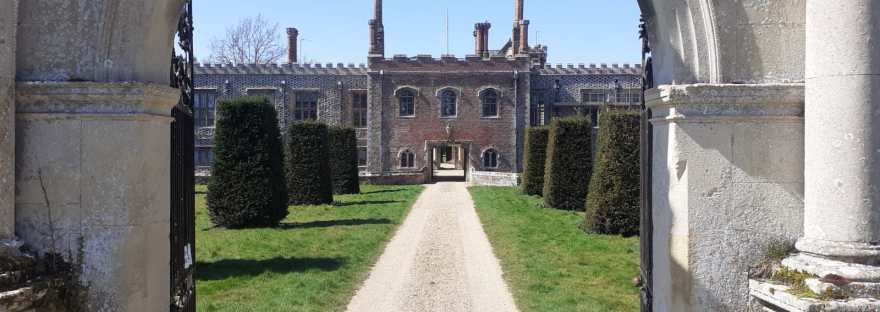
Aside from a passing reference to the old gamekeeper in Hunstanton park who was a bit Lady Chatterley in the way he hung huge panties on his clothesline outside his cottage in the woods the most significant literary reference to Old Hunstanton is that PG Wodehouse stayed there whilst writing several of his novels. For example, the series about Blandings castle that featured the pig called the Empress of Blandings which was inspired by a prize porker from the kitchen garden. He also wrote a story called Jeeves and the Impending Doom where he uses the Octagon( a shooting lodge used by one ancestor of the resident Le Strange family for practicing his violin) as the building where Bertie and a cabinet minister climb on to escape the wrath of a nesting swan.

Reflecting on Transience in the Garden

The Daffodil Memorial

Near me in Dulwich, at the Lordship lane end of Friern road is a memorial to some civilians (including children) who were presumably waiting at a bus stop before one of the infamous Doodlebug bombs were dropped by German bombers on their way back from the Docklands and killed them during the 2nd World War. It’s a forgotten spot with a few small trees and scruffy grass where the buses wait before they return to central London but in spring, the time of greatest hope, it erupts with a huge display of beautiful golden miniature daffodils in remembrance of those unlucky people that died there. Daffodils or Narcissi are named after the Greek god Narcissus because they seem to peer down into an imaginary pool like Narcissus and are so gay and bright in comparison with the dullness of early spring that they would probably fall in love with themselves if they saw their own reflection, like Narcissus. Anyway, the result is a fitting tribute to the horror of war- a lesson that humankind seems to forget time and again.

An Old Fashioned Garden in London

One of my previous clients, when I was gardening in Clapham, were two old ladies associated with the Ebenezer chapel, a small church on Fitzwilliam road. They had a very old fashioned cottage garden with roses, sweet williams, stocks, welsh poppies and similar charmingly blousy flowers. It was wonderful because it was a perfect snapshot of the 1950s era in which they had remained despite the continued march of time all around them.This was best summed up by their refusal to eat foreign food…… such as spaghetti!

The garden may have been stuck in time but it was a lot more fun to garden in than in the current trend for modern minimalist gardens where hard landscaping rules supreme. Also the welsh poppies I mentioned have naturalized all over the garden and were quite a sight with their orange or yellow blooms swaying in the breeze in spring. Sadly one of the old ladies died and the other went into a home and then my contract ended but I was able to spread the seed of the welsh poppies(they primarily spread themselves by seed) into a neighbour’s garden and into my own garden so the baton has been passed on so to speak and as long as I live I shall remember those sweet old ladies pottering around their own cottage garden that despite being in the middle of modern inner city London was so stuck in the fifties.

The Blackbird’s Soliloquy              

I wrote in my first book about my affection for the blackbird and this affection has only grown since the Covid pandemic. When I was struck down with Covid in April 2020 I suffered terrible fatigue. This forced me to spend long hours sitting in the spring sunshine in my own garden and as chance would have it a male blackbird took up residence in a neighbouring ash singing his heart out in the hope of enticing a female blackbird to join him. It was a very similar experience to what HE Bates described in his book-A Love of Flowers in that when you are forced to sit or lie in one place for a long period of time small details such as the love song of blackbirds, the way the sun falls on the wall or the gradual unfurling of buds takes a much greater significance than when we are too busy to stop and look.

Similarly as TS Eliott said ‘April is the cruellest month’ because if you are suffering ill health or old age the world does not stop and blink. The wonderful youth of spring will unfold whether you want it to or not. And that is the saddest and most beautiful thing all at the same time. Indeed such is the power of spring that even in intensely urban environments its power is felt unlike the other seasons that are somewhat dulled by the squalor of intense human activity. I was made most aware of this yesterday- on the 5th of April 2023, exactly three years on from when I was struck by Covid as I drove down a street in Herne Hill, London that is lined exclusively with flowering cherries which were at the peak of their beauty. Ultimately this transience must be savoured, perhaps the cherry trees are saying ‘fling off your clothes and dance with us in the sun because it won’t last.’ to paraphrase the words of the great 20th plantsman and writer, Christopher Lloyd.

For the love of a cherry my hands will always be stained red…

The cherry is by far my favourite fruit but apples,plums,pears and raspberries are not far behind. I have never had a natural ability at growing fruit and vegetables although by amateur standards I am not too bad. I think this has led to my having a fascination with commercial fruit and vegetable cultivation from the Rhubarb triangle near Wakefield to artichoke production in Brittany. This is a tad ironic because at horticultural college I opted to study Medicinal horticulture instead of Commercial horticulture( which focussed on fruit production because it was in Kent). As a result I was endlessly teased by the fruit growers that I spent my time skipping by the light of the full moon to harvest lavender.

I suppose I felt that commercial fruit growing is essentially a practical process and although that is interesting it has little romance to it. Effectively I wanted to grow commercial quality fruit (without the pesticides) in a classic English orchard with bulbs and wild flowers in the long grass beneath it and maybe some pigs being fattened up on the windfall apples. It was a version of the classic romanticized image of the English small holder when the air was clear, the water sweet and industrialization of farming had not tainted the purity of the magical shire-land of England. Complete nonsense of course.

Tied in with this was another notion of mine that I wanted to have an orchard like Ulysses, from the Greek story of the Odyssey, had had in his kingdom so he could go into the orchard and pick the freshest, tastiest fruit from the trees there. Eventually through the acquisition of an allotment, in Brixton of all places, I have obtained a version of these two romantic images as I have planted red, white and blackcurrants as well as apples, plums and cherries. The only part of this childhood dream that did not come to pass is that I never did stare deep into the eyes of the real life fair Helen, the most beautiful woman in the world whose empathy for others was so great that she had a brooch of dripping blood to symbolize this.

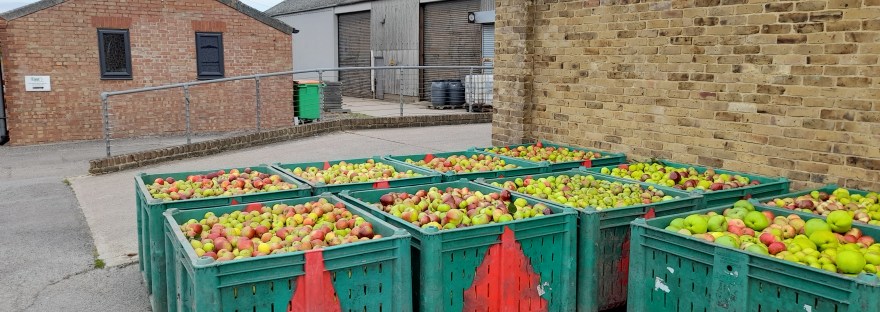
I may not be quite as discerning as fair Helen as to what I put in my mouth but I do love food immensely. With these hanging threads pulled together as well as living in South East London I have made the pilgrimage down to the National fruit collection in Faversham, Kent to taste the fruit. As I said cherries are my favourite although not to the same extent as Fredrick the Great of Prussia (Old Fritz) who was prepared to spend the equivalent of 100 euro on a single fruit. Nevertheless I try to return every year to Brogdale in Faversham to taste the fruit and hear about its cultivation and the challenges facing the growers each year, usually from the weather.

Brogdale has become a political football, everyone pays lip service to its importance but no one is prepared to pay for its upkeep so it is jointly managed by the excellent volunteers of the Brogdale trust, Reading University and FAST(a business who are experts in Commercial fruit production).

But just in case you were wondering why it is so important let me explain. The fruit collection holds a huge number of fruit trees from all round the world. This gene pool is so diverse that it might offer future hybrids that could deal with the difficulties of climate change, pest and disease problems or indeed making the fruit trees themselves less vigorous for ease of picking in tandem with producing higher yields without additional cossetting.

Maybe that is a bit of blue skies thinking but these fruit trees are the creme de la creme of all the fruit tree breeding that has gone on from when the wild ancestors of these trees were brought in from the wild in pre-Roman times. Infact, Britain has led the way in fruit breeding particularly for apples so it seems not just a shame but a mistake to simply consider it such an insignificant part of our heritage, educational resources or indeed gene pool for research and development.

So perhaps consider a visit to Brogdale in July to eat the cherries or the apples in October and learn about the collection. You could even tie it in with a trip to Whitstable for oysters, another British food speciality.

A story of Entrepeneurship Against the Odds- The Pontefract Cake

The story of liquorice and its close relationship to the town of Pontefract in mid Yorkshire is quite remarkable.

The liquorice plant that is used in production of the sweet originates from the Mediterranean and Middle East(Glycyrrhiza glabra) although there are other species from other parts of the world which are similar in their chemical composition and physical appearance. It even grows wild in the alluvial soils of countries such as Iraq in the riverbeds of the Euphrates and Tigris rivers. So suitable is this habitat for its growth that it can be cultivated and harvested without any encouragement through agricultural practices such as fertilising, watering or replanting.

As you can imagine the climate of mid Yorkshire is completely different! Nevertheless, the soil is a deep, sandy loam which stays moist but is free draining thus mimicking the natural habitat of liquorice in the Euphrates river perfectly. However, the cultivation of liquorice in Pontefract is extremely labour intensive with annual applications of manure and replanting of the root every 3-5 years after it is harvested. Also, the harvesting of the root requires a specialist horticulturalist so that the highest yield of the root is obtained when it is dug up.

Initially the root was used raw as a sweet but also was a quite effective medicine in herbalism, particularly for easing(!) constipation. This all changed when George Dunhill added sugar to the extract to create the Pontefract cake in 1760. Within about 40 years 10 different companies were churning out about 25,000 Pontefract cakes a day. As the plant was so labour intensive to cultivate the raw root or extract was increasingly sourced from warmer climates such as Spain where it is cheaper to produce until around the 1960s when commercial cultivation of the plant ceased completely in Pontefract.

And yet the legacy of liquorice for Pontefract still exists in 2022 as there is still an inexplicable worldwide demand for it. This is reflected in the fact that a German company called Haribo bought Dunhills in 1990s and production continues at the original factory to this day. Infact, such has been its success that they opened another factory at Castleford nearby.

The other famous liquorice producer, Bassetts, of Sheffield who made the famous liquorice allsorts with good old Bertie Bassett in, occurred as a very fortunate mistake by a salesmen that accidentally mixed up the different types of sweets for a potential client. It is now owned by Cadbury-Schweppes.

To my mind it is an incredible story of British entrepeneurship that Pontefract has this legacy of growing a plant that is completely out of its climate zone and turning it into a sweet for which a global demand still exists. We need more great stories, in likeness of this, of modern entrepeneurship today in Britain. Unfortunately, it became apparent to me on visiting Pontefract that it was still living on Victorian credit now in 2022 which is the kind of depressing thought that should inspire Michael Gove’s levelling up fund!